I went to the dentist yesterday. That is always exhilarating. I had some fillings to get done, this time on both sides so I got shots on both sides. Needless to say... numb. That's a strange feeling - when your tongue goes to sleep and everything just seems to die in there. Like most dentists, mine allowed me to just sit there for a while, waiting for the drugs to kick in. During that time, my main concern was that someone was going to ask me a question. The last thing I wanted to do was say something.
Doin' okay? Yep.
How we doin'? Good.
Not going to warm up today, is it? Ummmm mmm.
The truth is... my mind was telling me that if I had to talk, things were going to get ugly. I can't feel my face. I'm pretty sure I'm drooling. Just leave me alone. But then a miracle happened - quite by accident. I don't even know what was said to me, but I spoke a complete sentence. It was almost unslurred to the extent that I wondered if the assistant even noticed. Then I spoke another one. That is CRAZY! I can still talk! I felt like Nicodemus. How can this be?
Our pastor says this, and I have found it to be invaluable. When we lose passion (ie. feeling) we fall back upon discipline. Our Christian walk should be about passion. It should be heart-driven! But there are times when the enemy gets a shot in. We deflate. We wear down and out. It's during these times when we fall back upon what we know how to do. Get up. Go to church. Pick up the bible and read a chapter. It doesn't seem meaningful at the time, but it keeps the spark alive - or perhaps even fans the flame to life again.
If you are numb, keep doing what you know how to do, even if you don't feel like it.
Friday, March 12, 2010


Thursday, March 11, 2010
Shaken and Stirred
Heb 12:25-26
(25) See that you do not refuse Him who speaks. For if they did not escape, those who refused him that spoke on earth, much more we shall not escape if we turn away from Him who speaks from Heaven,
(26) whose voice then shook the earth; but now He has promised, saying, "Yet once more I will not only shake the earth, but also the heavens."
Today is a day where things are being shaken. A CNN report just came in stating another 7.2 magnitude quake in Chile, with nearly a 7 aftershock just moments later. The earth is shaking like never before - don't let anyone kid you. This is significant as a sign of the times - a birth pain, and a physical representation of what is happening in the spirit.
People are being shaken to their spiritual core. The worldly are wondering. The spiritual are curious. The Godly are hungry.
Now is no time for passivity. Be deliberate in your spiritual walk. The Kingdom of Heaven is one that is ours by right - but must be taken by force (Matthew 11:12). You can not stumble into a throne room accidentally, sit down, wave a scepter and expect to be taken seriously even by your peers, much less your enemies. Someone with designs on the throne will come in and REMOVE YOU. Is this your plan?
Act 4:31
(31) And when they had prayed, the place where they were assembled was shaken. And they were all filled with the Holy Spirit, and they spoke the Word of God with boldness.
Wednesday, March 10, 2010
Quiet
One of the most challenging verses in all of scripture to me:
Psa 46:10a
(10) Be still, and know that I am God!
I often struggle with finding quiet. When my girls are sick, everything I hear is a baby crying. I hear it when the cat meows. I hear it when the ice maker knocks. I hear voices in the fan. I simply must learn... to be still.
Stillness is not easy to achieve. Honestly, there is for me a discipline to reaching it, which is why I'm not so good at it. Turn off the blasted TV. Or... at least turn off the world. Replace 'noise' with God. That can mean a book, a praise song, or a sermon. It's a conscious effort to do this, but boy does it bring peace!
Seek righteousness. It begins in the mind. It's not unlike a diet. If you haven't won the diet war in your mind, you can give up losing any weight. Look what righteousness brings:
Isa 32:17-18
(17) And the effect of righteousness will be peace, and the result of righteousness, quietness and trust forever.
(18) My people will abide in a peaceful habitation, in secure dwellings, and in quiet resting places.
When I think of eternity, I often think of the endless praise service, or the party, or the breaking of bread with brothers and sisters and with the King. But I can guarantee this about the coming, fulfilled Kingdom of Heaven: it will be peaceful. There will be places of silence. There will be places of awe and reverence. It will be a kingdom of rest.
Monday, March 08, 2010
The Abominable Shepherd
Gen 46:33-34
(33) And it shall come to pass, when Pharaoh shall call you, and shall say, What is your occupation?
(34) that ye shall say, Thy servants have been keepers of cattle from our youth even until now, both we, and our fathers: that ye may dwell in the land of Goshen; for every shepherd is an abomination unto the Egyptians.
There is a call going forth to those in the church to lead in a way that has been lacking for years. The call is to be shepherds - spiritual fathers. One of the last things Jesus told His newly restored disciple, Peter, was 'feed my sheep'. This lit a fire in Peter that still can be felt - as we are a result of that fire. The world despises a shepherd - let there be no mistake. The worldly view states that the strong survive and the weak are eliminated. The shepherd's view is that not a single sheep is lost. The world has not made it profitable to be a shepherd. Being a shepherd is a call to sacrifice for the sheep.
For Christians, this means a sacrifice of time, energy, resources... our very lives. We pour this into others so that others will surpass us in our own walk. The shepherd's walk is the servant's walk. Jesus lived it. Jesus expects us to do the same.
In our Christian walk, despite the "level" of maturity, if we are not pouring into someone else we are wasting the breath God gave us. We are ignoring His commission. There is no reward for playing it safe. The one who dies with the most bible verses memorized does NOT win. But the one who impacts others for the Kingdom of Heaven will revel in victory for all of eternity.
Egyptians despised shepherds. Yet Egyptians had cattle. Egyptians had a great need for that which they held in disdain. The world is no different. If we live our lives as we are called, the world will not likely sing us any praises, but at the same time, our mark will be indelibly felt.
Gen 47:5-6
(5) And Pharaoh spoke to Joseph, saying, Your father and your brothers have come in to you.
(6) The land of Egypt is before you; cause your father and your brothers to live in the best of the land; let them live in the land of Goshen. And if you know men of ability among them, make them chiefs of livestock over what is mine.
Friday, February 26, 2010
Mud
When Jesus walked, He did many amazing works of healing. Yet He rarely did the same thing twice. Sometimes He spoke (Matthew 8:13). Sometimes He did nothing (Luke 8:47). Sometimes He did the touching (Luke 22:51). Sometimes He spit and made mud.

Joh 9:6-7
(6) When he had thus spoken, he spat on the ground, and made clay of the spittle, and anointed his eyes with the clay,
(7) and said unto him, Go, wash in the pool of Siloam (which is by interpretation, Sent). He went away therefore, and washed, and came seeing.
What would have happened to Galilee and Jerusalem had Jesus only healed by spitting in the dirt? I dare say that part of the world would have been bought by tourists desiring the healing dirt of Israel sitting on their shelves at home. But Jesus was not 'figured out' that easily. He mixed things up.
The Lord knew what we would do. We would forsake the relationship and just buy the dirt. We had done it before. The people of Israel were being bitten by serpents. They were dying in droves. God told Moses to make a brass serpent and put it on a pole so that the people could look upon it and be saved. The people were more than happy to oblige. Consequently, they did not see the serpent as God's mercy upon them. By the time King Hezekiah was in power, the people had enshrined the brass snake and were burning incense to it. This is what we do. We worship the mud.
Are there jars of mud, or brass serpents, or pastors, or denominations in our lives today that have become our God-replacements?
Thursday, February 25, 2010
Extend The Olive Branch

Pro 16:7
(7) When a man's ways please Jehovah, He makes even his enemies to be at peace with him.
I don't have a lot to say about this that it doesn't say for itself. This precept is profoundly apparent in my life today. Most of us have enemies. Some are people we have done wrong. Some are people who make everyone their enemies. Whether justified or not, God works this miracle of peace into our existence.
Make an effort to show God's love to someone whom you love, but don't like, today. Blessed are the peacemakers.
Wednesday, February 24, 2010
It Is Written
Mat 4:1-2
(1) Then Jesus was led by the Spirit up into the wilderness, to be tempted by the Devil.
(2) And when He had fasted forty days and forty nights, He was afterwards hungry.
After reading this passage, it is very easy to surmise that Jesus was weak and hungry after fasting in the wilderness for forty days. What a time to meet the most devious of all beings - the devil. Jesus 'entertained' the devil for a while. When the devil would tempt Him, He always replied with 'It has been written'.
Mat 4:4
(4) But answering, He said, It has been written: "Man shall not live by bread alone, but on every Word going out of the mouth of God."
for it has been written: "He shall give His angels charge concerning You, and they shall bear You on their hands, lest You strike Your foot against a stone."
For it has been written: "You shall worship the Lord your God, and you shall serve Him only."
Still, few of us take much stock in learning what has been written. Our reasoning is that we no longer need to memorize the text because it's legalistic to do such. Or, it's not applicable to our walk today. Or, we might even say that Jesus had it easy, seeing as He was the living Word it was natural for Him to quote it.
It is also easy to skim quickly over the fact that Jesus fasted - often. It could be said that this was what made Him strong - not weak. Perhaps the devil sees things from a fleshly nature - how ironic. The worst possible time to tempt the Son of God, hungry or not, was at the conclusion of forty days with His Father. Do we utilize this weapon of fasting against the enemy? Fasting... committing the Word to our hearts...
For those of us who like excuses, it really doesn't matter which one we choose. It's possible we just aren't ready for an encounter with the enemy.
Tuesday, February 23, 2010
Signs Will Follow
Mat 2:1-3
(1) And when Jesus had been born in Bethlehem of Judea in the days of Herod the king, behold, wise men arrived from the east to Jerusalem,
(2) saying, Where is He born King of the Jews? For we saw His star in the east and have come to worship Him.
(3) But Herod the king having heard this, he was troubled and all Jerusalem with him.
After Jesus was born, He upset things right away. Scripture says 'all Jerusalem' was troubled. Wow! And He hadn't even learned to walk! This is significant because it reiterates a truth about who He is, and about who WE are. Jesus was the one the enemy had warred over and worried about ever since the Genesis 3:15 prophecy.
Joh 11:47
(47) Then the chief priests and the Pharisees assembled a sanhedrin, and said, What are we doing, for this man does many signs?
Certainly things did not improve for the enemies of Jesus. Everywhere He went He stirred things up. For the religious, the biggest problem seemed to be the signs. Miracles. It isn't difficult to get past any message that lacks power, but it's incredibly difficult to write off anyone whose message is accompanied by signs of great power. Religion in itself has no power, so it is offended by such a display.
Mar 16:17
(17) And miraculous signs will follow to those believing these things: they will cast out demons in My name; they will speak new languages;
Jesus said that the same signs (even greater) would follow those who believed and abode in Him. He did not say the signs would have to be sought after. He did not say the signs might happen to a few. He said signs would follow. Miraculous signs will follow - if.
Monday, February 22, 2010
All This Begatting
These are some observations about the text in Matthew Chapter 1. In this lineage of Jesus through Joseph, I found some things I had not noticed before.
Mat 1:5-6
(5) and Salmon fathered Boaz out of Rahab, and Boaz fathered Obed out of Ruth, and Obed fathered Jesse,
(6) and Jesse fathered David the king. And David the king fathered Solomon out of her who had been the wife of Uriah,
Boaz fathered Obed out of Rahab, and David fathered Solomon out of Bathsheba. However, Bathsheba was not named. Admitting my ignorance, I would assume this has something to do with the sin that was committed.
From here, my thoughts went directly to what God Fathered... His church. The seed was Jesus (Matthew 13:37), and the mother, it could be said, would be the Holy Spirit (Acts 2). Interestingly enough, the Holy Spirit (Ruach ha Kodesh) is 'feminine' in the Hebrew, while God the Father is a masculine, and obviously Jesus the Son was a male. Why, then, might Jesus have to go away before Pentecost? (John 16:7) Because the seed is never visible at conception.
This analogy is offensive to some... but I do not think anyone would argue that the church was birthed on Pentecost. To the offended parties, I would ask, from whom was the church birthed?
Remember this, too. God IS a god of patterns. He created male and female and instructed them to be fruitful and multiply. Dwell on this.
Tuesday, February 16, 2010
The Vineyard of the Kingdom
Mat 21:33-44 HNV (33) "Hear another parable. There was a man who was a master of a household, who planted a vineyard, set a hedge about it, dug a winepress in it, built a tower, leased it out to farmers, and went into another country. (34) When the season for the fruit drew near, he sent his servants to the farmers, to receive his fruit. (35) The farmers took his servants, beat one, killed another, and stoned another. (36) Again, he sent other servants more than the first: and they treated them the same way. (37) But afterward he sent to them his son, saying, 'They will respect my son.' (38) But the farmers, when they saw the son, said among themselves, 'This is the heir. Come, let's kill him, and seize his inheritance.' (39) So they took him, and threw him out of the vineyard, and killed him. (40) When therefore the lord of the vineyard comes, what will he do to those farmers?" (41) They told him, "He will miserably destroy those miserable men, and will lease out the vineyard to other farmers, who will give him the fruit in its season." (42) Yeshua said to them, "Did you never read in the Scriptures, 'The stone which the builders rejected, the same was made the head of the corner. This was from the Lord. It is marvelous in our eyes?' (43) "Therefore I tell you, the Kingdom of God will be taken away from you, and will be given to a nation bringing forth its fruit. (44) He who falls on this stone will be broken to pieces, but on whoever it will fall, it will scatter him as dust."
Jesus spoke constantly about the Kingdom. In Matthew alone, kingdom is mentioned in 53 different verses, and multiple times in some of those verses. Many of those times, Jesus likened the Kingdom to a vineyard. Why a vineyard?
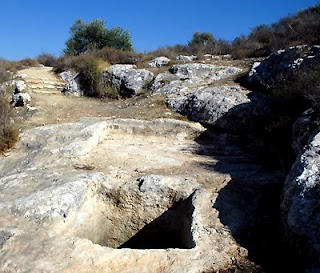
A vineyard is a place of FRUIT PRODUCTION. Other than that single point of fact, there doesn't seem to be a common rule about vineyards. The rules are up to the Master - or Owner. Lets take a look at what Jesus said about this particular vineyard - the Kingdom.
From this point, the problems were not the enemy outside the vineyard. The corruption came from within the vineyard - the servants themselves. If you'll recall, the serpent was 'in' Eden.
This Kingdom is BIG, and it is DEFINED by fruit production. It's a kingdom where the laborers are expected to be fruitful, and to give the master his due. I believe it's interesting that the evil servants were producing fruit (or at least trying to), but desired to keep it all for themselves.
Jesus spoke constantly about the Kingdom. In Matthew alone, kingdom is mentioned in 53 different verses, and multiple times in some of those verses. Many of those times, Jesus likened the Kingdom to a vineyard. Why a vineyard?

A vineyard is a place of FRUIT PRODUCTION. Other than that single point of fact, there doesn't seem to be a common rule about vineyards. The rules are up to the Master - or Owner. Lets take a look at what Jesus said about this particular vineyard - the Kingdom.
- God is the Master of a household. It was He who planted the vineyard. Eden was this way - a garden. The Kingdom is this way.
- He set a hedge around it. This was a protected vineyard. Eden was this way. The Kingdom is this way.
- There was a wine press in it. That means that within the vineyard - and the Kingdom - are all the tools needed to produce the final product.
- There is a tower within it. There is always a method for seeing what the enemy is up to. What would that be in the Kingdom?
- It was leased to farmers. It wasn't sold - it was leased. God set Adam and Eve to work. He said, "Be fruitful and multiply." What did he ask for in return? All the fruit, or a small portion? How does the Kingdom work?
- The Master went away to let the workers do their work. Why? Conceivably, He had work to do of His own.
- When was He to return? When it was time for harvest.
From this point, the problems were not the enemy outside the vineyard. The corruption came from within the vineyard - the servants themselves. If you'll recall, the serpent was 'in' Eden.
This Kingdom is BIG, and it is DEFINED by fruit production. It's a kingdom where the laborers are expected to be fruitful, and to give the master his due. I believe it's interesting that the evil servants were producing fruit (or at least trying to), but desired to keep it all for themselves.
Monday, February 15, 2010
Settling Too Soon

(Num 32:1 HNV) Now the children of Re'uven and the children of Gad had a very great multitude of livestock: and when they saw the land of Ya`zer, and the land of Gil`ad, that behold, the place was a place for livestock;
When I was in high school, I had plans to go to the Naval Academy. I was into the military thing - loved ships and jets and the thought of driving either... for money... quite a bit of money. Then I discovered guitars and rock and roll and how intricately woven with females that scene was. When it came down to decision time, I decided that Gilead was a place for guitars, and I had a multitude of guitars. Silly, looking back. I don't spend my life in regret because God allowed me to choose and He was with me, just as He was with Reuben, Gad, and Manasseh.
But God's intent for Reuben, Gad, and Manasseh was not based on what they had in the desert (cows). It was based on what He had for them in the Promised Land (unknown). They chose door number one and inherited a place for cows, sheep, and goats. A fine inheritance, if you are a bovine.
Incidentally, the desert 'was' prime pasture land. If it was green, it wasn't given to the goats - it was farmed. These folks settled in the desert. Was there water near by? Yes... but it was still desert. Do we settle before we reach the Promise Land?
Friday, February 12, 2010
Vanity "Fail"
Jer 2:5 HNV
(5) thus says the LORD, What unrighteousness have your fathers found in me, that they have gone far from me, and have walked after vanity, and are become vain?
Somewhere along the line, everyone who has ever breathed oxygen will stand before God in spirit. I say this somewhat flippantly, because it is simply impossible for us to imagine what this experience might be like. We know that John did it - in the spirit - and "fell at His feet like a dead man".
John knew Jesus, personally. No man was closer to the King of Kings while He walked the earth than John. John fell - like a dead man. Meditate on that for just a minute.
For some, this experience will be even more terrifying. Exponentially so. You might say that every horror conceived by man could not be condensed into such a horrific moment as the one in which an estranged man stands before Holy God. When that happens, the question might be asked, "What unrighteousness have you found in Me, that you have gone far from me, and have walked after vanity, and have become vain?" There will be no one dare answer that question.
It is a good question, though. At some point, love was not enough for someone. Kindness was met with suspicion. It happens every day. Someone turns their face away from God because they simply cannot believe they owe Him anything - much less everything. When self preservation is the only thing - it fails. It is vanity.
Mat 10:39 HNV
(39) He who seeks his life will lose it; and he who loses his life for my sake will find it.
Thursday, February 11, 2010
Devouring the Holy
These are perilous times. Most nations are not doing well - few are thriving, if any. We have seen prosperous times in the last couple of decades, but those seem very distant. What gives?
There is a precept in scripture that basically says that how well you deal with Israel determines how well you live, thrive, and prosper. Most of us are familiar with the passage in Genesis 12:3 which says God will bless those who bless Israel, and curse those who curse Israel. Jeremiah gives us another reason blessings and curses fall:
Jer 2:3 HNV
(3) Yisra'el [was] holiness to the LORD, the first fruits of his increase: all who devour him shall be held guilty; evil shall come on them, says the LORD.
Israel was God's First Fruits! All First Fruits given to God are Holy, and if you devour that which is Holy, you had better be a priest - also Holy. If not, then evil comes, according to the word of God.
David stumbled into the tabernacle - starving - and ate the shew bread that was reserved for the priests. It was holy to God - set apart. But David's life was spared because He, too, had set himself apart for God. He danced into Jerusalem wearing a linen ephod (priestly garment), an early picture of Jesus - both king and priest. We were also made kings and priests by God, a HOLY nation. We must bless Israel, God's First Fruits, because we are growing upon them. They are the stump which sprouted that we were grafted into.
The nations act in ignorance. They are like children in a lion's den - captivated by something deadly. We, as Christians, are to pray for the peace of Jerusalem and the salvation of Israel. Lets be diligent in doing that! Be blessed!
Tuesday, February 02, 2010
God Is Moving
Act 1:4 MKJV
(4) And having met with them, He commanded them not to depart from Jerusalem, but to await the promise of the Father which you heard from Me.
We hear this expression from time to time: "God is really moving there." Maybe you're speaking to someone at work or at the game, and the conversation turns to church. One person is a churchgoer, the other is looking... and one says to the other, "You should really come visit my church. God is really doing a huge work there."
That sounds a bit pretentious. Oh really? God is doing something at your church and not at the church on the next corner?
Believe it or not... that might be the truth.
Jesus told His disciples to not leave Jerusalem because something amazing was going to happen in their midst - there. Had any one of them decided to leave - even for a good cause - they would have missed what God would do. It's not that God couldn't have poured His spirit out at the synagogue in Capernaum... it's that He didn't. Not then, and probably never.
The point is this. If God isn't doing a tremendous work at your church, why don't you go to where He IS doing a tremendous work? Are you waiting for Him to come around again? What if He doesn't? When you overhear someone say that God is 'doing a wonderful thing there', inquire. Find out where and go there!
Monday, February 01, 2010
God Is Never Worried
Worry is like hunger. It comes, and it goes. And it occurs just about as often.
How will I get through this meeting?
What if this is more than just a cold?
What if that's not heartburn?
Did I leave the iron on?
Did I leave the faucet dripping?
Do we have enough gasoline to make it?
This is about 20 minutes worth of worry for me. I don't even consider myself a worrier. Mostly, I tend to keep an even keel. But still, some of these things are important. Even if I'm not worried about 'me', I do have a family and I worry about 'them'. There is no end. Really.
Except that I have this huge desire to be like Jesus, and Jesus never worried. Isn't that something to think about?
Jesus never worried. Not about Lazarus. Not about Judas. Not about the cross. Not about if his precious mom would survive the entire experience. This is unbelievable. But true.
Worry is a sin, and Jesus had no sin. So what IN THE WORLD is the key?
1Jn 4:18 HNV
(18) There is no fear in love; but perfect love casts out fear, because fear has punishment. He who fears is not made perfect in love.
This verse reads in this way: If I really loved - perfectly - I wouldn't fear, and therefore wouldn't worry. I think this is an improper translation.
How about this: if we knew Him as we should - because He IS perfect love - then we would have no fear. In your worst time, imagine that Jesus Himself was sitting right next to you. He could answer all questions in your mind, and you could read His expressions. During the diagnosis when most people would crumple in terror, you could look over at Jesus and He could shrug as if to say, "That's nothing. They think they know, but I have the final say." No fear.
Yeah, that would be nice, but....
But, I haven't read my bible in 2 years. I haven't been to church since Easter. I haven't prayed since I was a kid. Understandable.
Okay, well how about this: I pray every night and every morning, but 'this' morning... I missed because I got up late. Or, I've read the bible through 15 times but I'm taking a little break this week because I've been sick. Understandable.
In both cases, we deprive ourselves from our source of strength. Our lifeline. If I haven't sat in silent meditation and prayer enough to hear His voice, then I may not have enough Love to cast out all my fears. That's just the way it is.
Friday, January 29, 2010
Reaping 100 Times More Than You Sow
Gen 26:12 HNV
(12) Yitzchak sowed in that land, and reaped in the same year one hundred times what he planted. The LORD blessed him.
Most of us who regularly attend church hear about reaping more than we sow. Scripture speaks of it a lot. For me, particularly, this is easy to overlook and I blame it on our modern era of wealth. When I think of reaping one hundred times what I sow, I think of going down to the hardware store, buying $200 worth of seed, planting it on a lot and reaping $20,000 in produce.
Except that doesn't just happen. If it were that easy, we would all be farmers.
Isaac (Yitzchak) planted 1 corn stalk. 100 came up. Explain that.
It isn't explainable. It's God. God blesses in this way. This is a profound blessing from following God!
So how much are we reaping? Is it more than we can carry? If not, let's examine what we have been sowing.
Tuesday, January 26, 2010
The Fire and the Knife
Gen 22:6 HNV
(6) Avraham took the wood of the burnt offering and laid it on Yitzchak his son. He took in his hand the fire and the knife. They both went together.
In every sacrifice, there are two elements. A knife, and fire. The knife is for killing, while the fire is for transforming. This entire process is a picture of a redemption plan.
To enter the presence of a Holy God, we cannot bring our sinful flesh. The knife puts an end to the flesh, and the fire transforms it to smoke - or spirit. Remember, it's a picture. Ultimately, pictures were only a reminder to God of what He must do to restore us completely - and ultimately - He did it, through Jesus.
The problem with the angels that sinned is they have no blood to shed, nor do they have a transformation to make, for they are already God-like in that they are spirit.
Killing time is a real phenomenon. We can really waste it away. But when sacrificed to God, it is always transformed into something beautiful that we would not trade. Finances are no different. Talents are no different. Anything can be wasted. But when sacrificed to God, something beautiful always comes of it.
Monday, January 25, 2010
Swept Away
Gen 19:12-15 And the men said to Lot, Have you anyone here besides yourself? Bring your sons-in-law, and your sons, and your daughters, and whatever you have in the city, bring them out of this place. (13) For we will destroy this place because great is the cry of them before the face of Jehovah. And Jehovah has sent us to destroy it. (14) And Lot went out and spoke with his sons-in-law, who married his daughters, and said, Get up and get out of this place, for Jehovah will destroy this city. But he seemed as one that mocked to his sons-in-law. (15) And when the dawn rose up, then the angels hurried Lot, saying, Rise up! Take your wife and your two daughters who are here, lest you be consumed in the iniquity of the city.
This is a sad story of a man named Lot who was so mired up in the world that it nearly cost him everything he had - including most of his family. Sodom was a wicked city, but it had attracted Lot from the beginning because of the opportunities it represented. There is little doubt that Lot thought he could remain set-apart, or sanctified, in the city. The argument could certainly be made that he had succeeded in that. After all, he was a judge. His opinion mattered, right? Only it didn't. His neighbors despised him. His daughters had married men who were wicked. Lot had at least two daughters (who were there), but had others that were not. When the time came, only those still living under his roof escaped the city.
Many tout the cost of living a life for Christ. Persecution! Ridicule! Maybe worse! But Lot ended up with only two daughters in the end. Even his own wife could not let go of the city within her soul.
I still take great comfort that God allows the righteous safe passage from judgment - if he will. Not only that, but God allows the righteous to bring 'whoever' and 'whatever' they have with them to safety. What grace! But in the end, each must make up their own mind.
How mired up in the world are we?
Friday, January 22, 2010
Called to Elam, Stuck in Marah
Exo 15:22-27 HNV
(22) Moshe led Yisra'el onward from the Sea of Suf, and they went out into the wilderness of Shur; and they went three days in the wilderness, and found no water.
(23) When they came to Marah, they couldn't drink from the waters of Marah, for they were bitter. Therefore the name of it was called Marah.
(24) The people murmured against Moshe, saying, "What shall we drink?"
(25) Then he cried to the LORD. The LORD showed him a tree, and he threw it into the waters, and the waters were made sweet. There he made a statute and an ordinance for them, and there he tested them;
(26) and he said, "If you will diligently listen to the voice of the LORD your God, and will do that which is right in his eyes, and will pay attention to his mitzvot, and keep all his statutes, I will put none of the diseases on you, which I have put on the Egyptians; for I am the LORD who heals you."
(27) They came to Elim, where there were twelve springs of water, and seventy palm trees: and they encamped there by the waters.
When Israel was led out of Egypt, they had high expectations. They had just witnessed the destruction of their enemy, Pharaoh. Now they were free! But they were in the desert. The desert has it's own challenges. It's a place where we go through stages. It took Israel 3 days to reach their first stage: bitterness.
Whenever God leads us to a new place, He often allows us to run out of whatever we have packed along with us. In Israel's case - it was water. Three days into the desert, Israel had been drinking water... from Egypt. As long as the canteens were full, they were fine and full of hope. But when the heat turned up and the water levels grew low, bitterness set in.
Notice what the Lord said. "If you will diligently listen to the voice of the LORD your God, and will do that which is right in his eyes, and will pay attention to his mitzvot (commands), and keep all his statutes, I will put none of the diseases on you, which I have put on the Egyptians; for I am the LORD who heals you." To me, this verse seemed out of place. What did this little guarantee have to do with their current plight? The plague most of us deal with - as Christians - more than anything else is bitterness. We have been offended - by man, by God, by circumstances... we carry bitter spirits.
It is not until we let God make our current bitterness sweet at Marah that we can move on to Elam.
Also take note of the numbers: 3 days, 12 springs, 70 palms. 3 days speaks to the fullness of discontent for Israel. For us, this could be any length of time that we wallow in our own unsatisfied state. The 12 springs speaks of a new FAITH, where 12 tribes 'believed' in God, and 12 disciples 'believed' in their rabbi, this signifies a realization of faith. Once we realize that God provides - even when we cannot see Him at work - we reach a place of FAITH where from that point on, we see the FULLNESS of His provision - the 7(0) palm trees.
This is a natural progression.
When Martha sent for Jesus because her brother was sick, Jesus waited. Why? Because God was letting Mary and Martha run out of what they were carrying on their own - their own expectations. They then arrived at a point of bitterness - which Jesus experienced Himself when He wept. But God threw the wood into the sprint and it because sweet. Lazarus came forth. From that point on, you can bet that the FAITH of Mary, Martha, and Lazarus was an Elam faith - one where the provision of God was perfect and full.
Do you have bitterness in your life? What do you carry with you that is still left over from Egypt?
Thursday, January 21, 2010
Is Our Bread Really Unleavened?
Exo 13:6-7 KJV
(6) Seven days thou shalt eat unleavened bread, and in the seventh day shall be a feast to the LORD.
(7) Unleavened bread shall be eaten seven days; and there shall no leavened bread be seen with thee, neither shall there be leaven seen with thee in all thy quarters.
The week of Unleavened Bread is a week-long festival that was instituted by God. This festival began with Passover, included the days of Unleavened Bread, and concluded with First Fruits. This was quite a week! The Jewish people took this extremely seriously, as if the above command from God left much room for otherwise. This was a time of introspection for the Hebrews. They removed all traces of yeast from their homes. They removed anything that 'might' ferment. Many even change the feed for their livestock in order to make the milk more kosher. This is serious!
The first thing we might think as western Christians is 'silliness'. Or 'what legalism!'
To me, this is what we, as western believers, have missed in our walk with Jesus. In our pious quests for righteousness, we have become more like the rich young ruler who was looking for a bare minimum requirement for inheriting the kingdom. (Matt 19:16) We put in our time and we 'call it good'. To the Hebrew, this is a flawed perspective. It fails to treat God as who He really is - Holy. Zephaniah said this:
Zep 1:12 KJV
(12) And it shall come to pass at that time, that I will search Jerusalem with candles, and punish the men that are settled on their lees: that say in their heart, The LORD will not do good, neither will he do evil.
The Hebrew reads this and concludes in his heart that God is not one to be trifled with. He is one who searches the hearts of men meticulously. The Christian reads this passage and might conclude that God sure had it out for Israel back then. Aren't we grateful for grace!
So we play our grace card... and go back to our lives of part-time righteousness and sin-management.
In my own heart, I find it a travesty to think that we can be saved as of by fire, living life as if God does not care while next to us stands a Jewish man who does not believe Jesus was Messiah yet strains with all his might to walk as his father Abraham did - in faith and purity - believing that God is good and Holy and will keep His promises. This is very difficult for me to reconcile. Salvation is by faith. Jesus is the way, the truth, and the life. Somewhere, however, many of us as Christians have MISSED holiness. We should look to the examples others have set and learn from them.
Subscribe to:
Posts (Atom)