Gen 46:33-34
(33) And it shall come to pass, when Pharaoh shall call you, and shall say, What is your occupation?
(34) that ye shall say, Thy servants have been keepers of cattle from our youth even until now, both we, and our fathers: that ye may dwell in the land of Goshen; for every shepherd is an abomination unto the Egyptians.
There is a call going forth to those in the church to lead in a way that has been lacking for years. The call is to be shepherds - spiritual fathers. One of the last things Jesus told His newly restored disciple, Peter, was 'feed my sheep'. This lit a fire in Peter that still can be felt - as we are a result of that fire. The world despises a shepherd - let there be no mistake. The worldly view states that the strong survive and the weak are eliminated. The shepherd's view is that not a single sheep is lost. The world has not made it profitable to be a shepherd. Being a shepherd is a call to sacrifice for the sheep.
For Christians, this means a sacrifice of time, energy, resources... our very lives. We pour this into others so that others will surpass us in our own walk. The shepherd's walk is the servant's walk. Jesus lived it. Jesus expects us to do the same.
In our Christian walk, despite the "level" of maturity, if we are not pouring into someone else we are wasting the breath God gave us. We are ignoring His commission. There is no reward for playing it safe. The one who dies with the most bible verses memorized does NOT win. But the one who impacts others for the Kingdom of Heaven will revel in victory for all of eternity.
Egyptians despised shepherds. Yet Egyptians had cattle. Egyptians had a great need for that which they held in disdain. The world is no different. If we live our lives as we are called, the world will not likely sing us any praises, but at the same time, our mark will be indelibly felt.
Gen 47:5-6
(5) And Pharaoh spoke to Joseph, saying, Your father and your brothers have come in to you.
(6) The land of Egypt is before you; cause your father and your brothers to live in the best of the land; let them live in the land of Goshen. And if you know men of ability among them, make them chiefs of livestock over what is mine.
Monday, March 08, 2010


Friday, February 26, 2010
Mud
When Jesus walked, He did many amazing works of healing. Yet He rarely did the same thing twice. Sometimes He spoke (Matthew 8:13). Sometimes He did nothing (Luke 8:47). Sometimes He did the touching (Luke 22:51). Sometimes He spit and made mud.

Joh 9:6-7
(6) When he had thus spoken, he spat on the ground, and made clay of the spittle, and anointed his eyes with the clay,
(7) and said unto him, Go, wash in the pool of Siloam (which is by interpretation, Sent). He went away therefore, and washed, and came seeing.
What would have happened to Galilee and Jerusalem had Jesus only healed by spitting in the dirt? I dare say that part of the world would have been bought by tourists desiring the healing dirt of Israel sitting on their shelves at home. But Jesus was not 'figured out' that easily. He mixed things up.
The Lord knew what we would do. We would forsake the relationship and just buy the dirt. We had done it before. The people of Israel were being bitten by serpents. They were dying in droves. God told Moses to make a brass serpent and put it on a pole so that the people could look upon it and be saved. The people were more than happy to oblige. Consequently, they did not see the serpent as God's mercy upon them. By the time King Hezekiah was in power, the people had enshrined the brass snake and were burning incense to it. This is what we do. We worship the mud.
Are there jars of mud, or brass serpents, or pastors, or denominations in our lives today that have become our God-replacements?

Joh 9:6-7
(6) When he had thus spoken, he spat on the ground, and made clay of the spittle, and anointed his eyes with the clay,
(7) and said unto him, Go, wash in the pool of Siloam (which is by interpretation, Sent). He went away therefore, and washed, and came seeing.
What would have happened to Galilee and Jerusalem had Jesus only healed by spitting in the dirt? I dare say that part of the world would have been bought by tourists desiring the healing dirt of Israel sitting on their shelves at home. But Jesus was not 'figured out' that easily. He mixed things up.
The Lord knew what we would do. We would forsake the relationship and just buy the dirt. We had done it before. The people of Israel were being bitten by serpents. They were dying in droves. God told Moses to make a brass serpent and put it on a pole so that the people could look upon it and be saved. The people were more than happy to oblige. Consequently, they did not see the serpent as God's mercy upon them. By the time King Hezekiah was in power, the people had enshrined the brass snake and were burning incense to it. This is what we do. We worship the mud.
Are there jars of mud, or brass serpents, or pastors, or denominations in our lives today that have become our God-replacements?
Thursday, February 25, 2010
Extend The Olive Branch

Pro 16:7
(7) When a man's ways please Jehovah, He makes even his enemies to be at peace with him.
I don't have a lot to say about this that it doesn't say for itself. This precept is profoundly apparent in my life today. Most of us have enemies. Some are people we have done wrong. Some are people who make everyone their enemies. Whether justified or not, God works this miracle of peace into our existence.
Make an effort to show God's love to someone whom you love, but don't like, today. Blessed are the peacemakers.
Wednesday, February 24, 2010
It Is Written
Mat 4:1-2
(1) Then Jesus was led by the Spirit up into the wilderness, to be tempted by the Devil.
(2) And when He had fasted forty days and forty nights, He was afterwards hungry.
After reading this passage, it is very easy to surmise that Jesus was weak and hungry after fasting in the wilderness for forty days. What a time to meet the most devious of all beings - the devil. Jesus 'entertained' the devil for a while. When the devil would tempt Him, He always replied with 'It has been written'.
Mat 4:4
(4) But answering, He said, It has been written: "Man shall not live by bread alone, but on every Word going out of the mouth of God."
for it has been written: "He shall give His angels charge concerning You, and they shall bear You on their hands, lest You strike Your foot against a stone."
For it has been written: "You shall worship the Lord your God, and you shall serve Him only."
Still, few of us take much stock in learning what has been written. Our reasoning is that we no longer need to memorize the text because it's legalistic to do such. Or, it's not applicable to our walk today. Or, we might even say that Jesus had it easy, seeing as He was the living Word it was natural for Him to quote it.
It is also easy to skim quickly over the fact that Jesus fasted - often. It could be said that this was what made Him strong - not weak. Perhaps the devil sees things from a fleshly nature - how ironic. The worst possible time to tempt the Son of God, hungry or not, was at the conclusion of forty days with His Father. Do we utilize this weapon of fasting against the enemy? Fasting... committing the Word to our hearts...
For those of us who like excuses, it really doesn't matter which one we choose. It's possible we just aren't ready for an encounter with the enemy.
(1) Then Jesus was led by the Spirit up into the wilderness, to be tempted by the Devil.
(2) And when He had fasted forty days and forty nights, He was afterwards hungry.
After reading this passage, it is very easy to surmise that Jesus was weak and hungry after fasting in the wilderness for forty days. What a time to meet the most devious of all beings - the devil. Jesus 'entertained' the devil for a while. When the devil would tempt Him, He always replied with 'It has been written'.
Mat 4:4
(4) But answering, He said, It has been written: "Man shall not live by bread alone, but on every Word going out of the mouth of God."
for it has been written: "He shall give His angels charge concerning You, and they shall bear You on their hands, lest You strike Your foot against a stone."
For it has been written: "You shall worship the Lord your God, and you shall serve Him only."
Still, few of us take much stock in learning what has been written. Our reasoning is that we no longer need to memorize the text because it's legalistic to do such. Or, it's not applicable to our walk today. Or, we might even say that Jesus had it easy, seeing as He was the living Word it was natural for Him to quote it.
It is also easy to skim quickly over the fact that Jesus fasted - often. It could be said that this was what made Him strong - not weak. Perhaps the devil sees things from a fleshly nature - how ironic. The worst possible time to tempt the Son of God, hungry or not, was at the conclusion of forty days with His Father. Do we utilize this weapon of fasting against the enemy? Fasting... committing the Word to our hearts...
For those of us who like excuses, it really doesn't matter which one we choose. It's possible we just aren't ready for an encounter with the enemy.
Tuesday, February 23, 2010
Signs Will Follow
Mat 2:1-3
(1) And when Jesus had been born in Bethlehem of Judea in the days of Herod the king, behold, wise men arrived from the east to Jerusalem,
(2) saying, Where is He born King of the Jews? For we saw His star in the east and have come to worship Him.
(3) But Herod the king having heard this, he was troubled and all Jerusalem with him.
After Jesus was born, He upset things right away. Scripture says 'all Jerusalem' was troubled. Wow! And He hadn't even learned to walk! This is significant because it reiterates a truth about who He is, and about who WE are. Jesus was the one the enemy had warred over and worried about ever since the Genesis 3:15 prophecy.
Joh 11:47
(47) Then the chief priests and the Pharisees assembled a sanhedrin, and said, What are we doing, for this man does many signs?
Certainly things did not improve for the enemies of Jesus. Everywhere He went He stirred things up. For the religious, the biggest problem seemed to be the signs. Miracles. It isn't difficult to get past any message that lacks power, but it's incredibly difficult to write off anyone whose message is accompanied by signs of great power. Religion in itself has no power, so it is offended by such a display.
Mar 16:17
(17) And miraculous signs will follow to those believing these things: they will cast out demons in My name; they will speak new languages;
Jesus said that the same signs (even greater) would follow those who believed and abode in Him. He did not say the signs would have to be sought after. He did not say the signs might happen to a few. He said signs would follow. Miraculous signs will follow - if.
(1) And when Jesus had been born in Bethlehem of Judea in the days of Herod the king, behold, wise men arrived from the east to Jerusalem,
(2) saying, Where is He born King of the Jews? For we saw His star in the east and have come to worship Him.
(3) But Herod the king having heard this, he was troubled and all Jerusalem with him.
After Jesus was born, He upset things right away. Scripture says 'all Jerusalem' was troubled. Wow! And He hadn't even learned to walk! This is significant because it reiterates a truth about who He is, and about who WE are. Jesus was the one the enemy had warred over and worried about ever since the Genesis 3:15 prophecy.
Joh 11:47
(47) Then the chief priests and the Pharisees assembled a sanhedrin, and said, What are we doing, for this man does many signs?
Certainly things did not improve for the enemies of Jesus. Everywhere He went He stirred things up. For the religious, the biggest problem seemed to be the signs. Miracles. It isn't difficult to get past any message that lacks power, but it's incredibly difficult to write off anyone whose message is accompanied by signs of great power. Religion in itself has no power, so it is offended by such a display.
Mar 16:17
(17) And miraculous signs will follow to those believing these things: they will cast out demons in My name; they will speak new languages;
Jesus said that the same signs (even greater) would follow those who believed and abode in Him. He did not say the signs would have to be sought after. He did not say the signs might happen to a few. He said signs would follow. Miraculous signs will follow - if.
Monday, February 22, 2010
All This Begatting
These are some observations about the text in Matthew Chapter 1. In this lineage of Jesus through Joseph, I found some things I had not noticed before.
Mat 1:5-6
(5) and Salmon fathered Boaz out of Rahab, and Boaz fathered Obed out of Ruth, and Obed fathered Jesse,
(6) and Jesse fathered David the king. And David the king fathered Solomon out of her who had been the wife of Uriah,
Boaz fathered Obed out of Rahab, and David fathered Solomon out of Bathsheba. However, Bathsheba was not named. Admitting my ignorance, I would assume this has something to do with the sin that was committed.
From here, my thoughts went directly to what God Fathered... His church. The seed was Jesus (Matthew 13:37), and the mother, it could be said, would be the Holy Spirit (Acts 2). Interestingly enough, the Holy Spirit (Ruach ha Kodesh) is 'feminine' in the Hebrew, while God the Father is a masculine, and obviously Jesus the Son was a male. Why, then, might Jesus have to go away before Pentecost? (John 16:7) Because the seed is never visible at conception.
This analogy is offensive to some... but I do not think anyone would argue that the church was birthed on Pentecost. To the offended parties, I would ask, from whom was the church birthed?
Remember this, too. God IS a god of patterns. He created male and female and instructed them to be fruitful and multiply. Dwell on this.
Mat 1:5-6
(5) and Salmon fathered Boaz out of Rahab, and Boaz fathered Obed out of Ruth, and Obed fathered Jesse,
(6) and Jesse fathered David the king. And David the king fathered Solomon out of her who had been the wife of Uriah,
Boaz fathered Obed out of Rahab, and David fathered Solomon out of Bathsheba. However, Bathsheba was not named. Admitting my ignorance, I would assume this has something to do with the sin that was committed.
From here, my thoughts went directly to what God Fathered... His church. The seed was Jesus (Matthew 13:37), and the mother, it could be said, would be the Holy Spirit (Acts 2). Interestingly enough, the Holy Spirit (Ruach ha Kodesh) is 'feminine' in the Hebrew, while God the Father is a masculine, and obviously Jesus the Son was a male. Why, then, might Jesus have to go away before Pentecost? (John 16:7) Because the seed is never visible at conception.
This analogy is offensive to some... but I do not think anyone would argue that the church was birthed on Pentecost. To the offended parties, I would ask, from whom was the church birthed?
Remember this, too. God IS a god of patterns. He created male and female and instructed them to be fruitful and multiply. Dwell on this.
Tuesday, February 16, 2010
The Vineyard of the Kingdom
Mat 21:33-44 HNV (33) "Hear another parable. There was a man who was a master of a household, who planted a vineyard, set a hedge about it, dug a winepress in it, built a tower, leased it out to farmers, and went into another country. (34) When the season for the fruit drew near, he sent his servants to the farmers, to receive his fruit. (35) The farmers took his servants, beat one, killed another, and stoned another. (36) Again, he sent other servants more than the first: and they treated them the same way. (37) But afterward he sent to them his son, saying, 'They will respect my son.' (38) But the farmers, when they saw the son, said among themselves, 'This is the heir. Come, let's kill him, and seize his inheritance.' (39) So they took him, and threw him out of the vineyard, and killed him. (40) When therefore the lord of the vineyard comes, what will he do to those farmers?" (41) They told him, "He will miserably destroy those miserable men, and will lease out the vineyard to other farmers, who will give him the fruit in its season." (42) Yeshua said to them, "Did you never read in the Scriptures, 'The stone which the builders rejected, the same was made the head of the corner. This was from the Lord. It is marvelous in our eyes?' (43) "Therefore I tell you, the Kingdom of God will be taken away from you, and will be given to a nation bringing forth its fruit. (44) He who falls on this stone will be broken to pieces, but on whoever it will fall, it will scatter him as dust."
Jesus spoke constantly about the Kingdom. In Matthew alone, kingdom is mentioned in 53 different verses, and multiple times in some of those verses. Many of those times, Jesus likened the Kingdom to a vineyard. Why a vineyard?
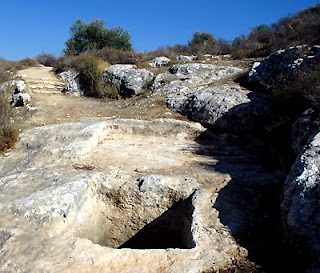
A vineyard is a place of FRUIT PRODUCTION. Other than that single point of fact, there doesn't seem to be a common rule about vineyards. The rules are up to the Master - or Owner. Lets take a look at what Jesus said about this particular vineyard - the Kingdom.
From this point, the problems were not the enemy outside the vineyard. The corruption came from within the vineyard - the servants themselves. If you'll recall, the serpent was 'in' Eden.
This Kingdom is BIG, and it is DEFINED by fruit production. It's a kingdom where the laborers are expected to be fruitful, and to give the master his due. I believe it's interesting that the evil servants were producing fruit (or at least trying to), but desired to keep it all for themselves.
Jesus spoke constantly about the Kingdom. In Matthew alone, kingdom is mentioned in 53 different verses, and multiple times in some of those verses. Many of those times, Jesus likened the Kingdom to a vineyard. Why a vineyard?

A vineyard is a place of FRUIT PRODUCTION. Other than that single point of fact, there doesn't seem to be a common rule about vineyards. The rules are up to the Master - or Owner. Lets take a look at what Jesus said about this particular vineyard - the Kingdom.
- God is the Master of a household. It was He who planted the vineyard. Eden was this way - a garden. The Kingdom is this way.
- He set a hedge around it. This was a protected vineyard. Eden was this way. The Kingdom is this way.
- There was a wine press in it. That means that within the vineyard - and the Kingdom - are all the tools needed to produce the final product.
- There is a tower within it. There is always a method for seeing what the enemy is up to. What would that be in the Kingdom?
- It was leased to farmers. It wasn't sold - it was leased. God set Adam and Eve to work. He said, "Be fruitful and multiply." What did he ask for in return? All the fruit, or a small portion? How does the Kingdom work?
- The Master went away to let the workers do their work. Why? Conceivably, He had work to do of His own.
- When was He to return? When it was time for harvest.
From this point, the problems were not the enemy outside the vineyard. The corruption came from within the vineyard - the servants themselves. If you'll recall, the serpent was 'in' Eden.
This Kingdom is BIG, and it is DEFINED by fruit production. It's a kingdom where the laborers are expected to be fruitful, and to give the master his due. I believe it's interesting that the evil servants were producing fruit (or at least trying to), but desired to keep it all for themselves.
Monday, February 15, 2010
Settling Too Soon

(Num 32:1 HNV) Now the children of Re'uven and the children of Gad had a very great multitude of livestock: and when they saw the land of Ya`zer, and the land of Gil`ad, that behold, the place was a place for livestock;
When I was in high school, I had plans to go to the Naval Academy. I was into the military thing - loved ships and jets and the thought of driving either... for money... quite a bit of money. Then I discovered guitars and rock and roll and how intricately woven with females that scene was. When it came down to decision time, I decided that Gilead was a place for guitars, and I had a multitude of guitars. Silly, looking back. I don't spend my life in regret because God allowed me to choose and He was with me, just as He was with Reuben, Gad, and Manasseh.
But God's intent for Reuben, Gad, and Manasseh was not based on what they had in the desert (cows). It was based on what He had for them in the Promised Land (unknown). They chose door number one and inherited a place for cows, sheep, and goats. A fine inheritance, if you are a bovine.
Incidentally, the desert 'was' prime pasture land. If it was green, it wasn't given to the goats - it was farmed. These folks settled in the desert. Was there water near by? Yes... but it was still desert. Do we settle before we reach the Promise Land?
Friday, February 12, 2010
Vanity "Fail"
Jer 2:5 HNV
(5) thus says the LORD, What unrighteousness have your fathers found in me, that they have gone far from me, and have walked after vanity, and are become vain?
Somewhere along the line, everyone who has ever breathed oxygen will stand before God in spirit. I say this somewhat flippantly, because it is simply impossible for us to imagine what this experience might be like. We know that John did it - in the spirit - and "fell at His feet like a dead man".
John knew Jesus, personally. No man was closer to the King of Kings while He walked the earth than John. John fell - like a dead man. Meditate on that for just a minute.
For some, this experience will be even more terrifying. Exponentially so. You might say that every horror conceived by man could not be condensed into such a horrific moment as the one in which an estranged man stands before Holy God. When that happens, the question might be asked, "What unrighteousness have you found in Me, that you have gone far from me, and have walked after vanity, and have become vain?" There will be no one dare answer that question.
It is a good question, though. At some point, love was not enough for someone. Kindness was met with suspicion. It happens every day. Someone turns their face away from God because they simply cannot believe they owe Him anything - much less everything. When self preservation is the only thing - it fails. It is vanity.
Mat 10:39 HNV
(39) He who seeks his life will lose it; and he who loses his life for my sake will find it.
(5) thus says the LORD, What unrighteousness have your fathers found in me, that they have gone far from me, and have walked after vanity, and are become vain?
Somewhere along the line, everyone who has ever breathed oxygen will stand before God in spirit. I say this somewhat flippantly, because it is simply impossible for us to imagine what this experience might be like. We know that John did it - in the spirit - and "fell at His feet like a dead man".
John knew Jesus, personally. No man was closer to the King of Kings while He walked the earth than John. John fell - like a dead man. Meditate on that for just a minute.
For some, this experience will be even more terrifying. Exponentially so. You might say that every horror conceived by man could not be condensed into such a horrific moment as the one in which an estranged man stands before Holy God. When that happens, the question might be asked, "What unrighteousness have you found in Me, that you have gone far from me, and have walked after vanity, and have become vain?" There will be no one dare answer that question.
It is a good question, though. At some point, love was not enough for someone. Kindness was met with suspicion. It happens every day. Someone turns their face away from God because they simply cannot believe they owe Him anything - much less everything. When self preservation is the only thing - it fails. It is vanity.
Mat 10:39 HNV
(39) He who seeks his life will lose it; and he who loses his life for my sake will find it.
Thursday, February 11, 2010
Devouring the Holy
These are perilous times. Most nations are not doing well - few are thriving, if any. We have seen prosperous times in the last couple of decades, but those seem very distant. What gives?
There is a precept in scripture that basically says that how well you deal with Israel determines how well you live, thrive, and prosper. Most of us are familiar with the passage in Genesis 12:3 which says God will bless those who bless Israel, and curse those who curse Israel. Jeremiah gives us another reason blessings and curses fall:
Jer 2:3 HNV
(3) Yisra'el [was] holiness to the LORD, the first fruits of his increase: all who devour him shall be held guilty; evil shall come on them, says the LORD.
Israel was God's First Fruits! All First Fruits given to God are Holy, and if you devour that which is Holy, you had better be a priest - also Holy. If not, then evil comes, according to the word of God.
David stumbled into the tabernacle - starving - and ate the shew bread that was reserved for the priests. It was holy to God - set apart. But David's life was spared because He, too, had set himself apart for God. He danced into Jerusalem wearing a linen ephod (priestly garment), an early picture of Jesus - both king and priest. We were also made kings and priests by God, a HOLY nation. We must bless Israel, God's First Fruits, because we are growing upon them. They are the stump which sprouted that we were grafted into.
The nations act in ignorance. They are like children in a lion's den - captivated by something deadly. We, as Christians, are to pray for the peace of Jerusalem and the salvation of Israel. Lets be diligent in doing that! Be blessed!
There is a precept in scripture that basically says that how well you deal with Israel determines how well you live, thrive, and prosper. Most of us are familiar with the passage in Genesis 12:3 which says God will bless those who bless Israel, and curse those who curse Israel. Jeremiah gives us another reason blessings and curses fall:
Jer 2:3 HNV
(3) Yisra'el [was] holiness to the LORD, the first fruits of his increase: all who devour him shall be held guilty; evil shall come on them, says the LORD.
Israel was God's First Fruits! All First Fruits given to God are Holy, and if you devour that which is Holy, you had better be a priest - also Holy. If not, then evil comes, according to the word of God.
David stumbled into the tabernacle - starving - and ate the shew bread that was reserved for the priests. It was holy to God - set apart. But David's life was spared because He, too, had set himself apart for God. He danced into Jerusalem wearing a linen ephod (priestly garment), an early picture of Jesus - both king and priest. We were also made kings and priests by God, a HOLY nation. We must bless Israel, God's First Fruits, because we are growing upon them. They are the stump which sprouted that we were grafted into.
The nations act in ignorance. They are like children in a lion's den - captivated by something deadly. We, as Christians, are to pray for the peace of Jerusalem and the salvation of Israel. Lets be diligent in doing that! Be blessed!
Tuesday, February 02, 2010
God Is Moving
Act 1:4 MKJV
(4) And having met with them, He commanded them not to depart from Jerusalem, but to await the promise of the Father which you heard from Me.
We hear this expression from time to time: "God is really moving there." Maybe you're speaking to someone at work or at the game, and the conversation turns to church. One person is a churchgoer, the other is looking... and one says to the other, "You should really come visit my church. God is really doing a huge work there."
That sounds a bit pretentious. Oh really? God is doing something at your church and not at the church on the next corner?
Believe it or not... that might be the truth.
Jesus told His disciples to not leave Jerusalem because something amazing was going to happen in their midst - there. Had any one of them decided to leave - even for a good cause - they would have missed what God would do. It's not that God couldn't have poured His spirit out at the synagogue in Capernaum... it's that He didn't. Not then, and probably never.
The point is this. If God isn't doing a tremendous work at your church, why don't you go to where He IS doing a tremendous work? Are you waiting for Him to come around again? What if He doesn't? When you overhear someone say that God is 'doing a wonderful thing there', inquire. Find out where and go there!
(4) And having met with them, He commanded them not to depart from Jerusalem, but to await the promise of the Father which you heard from Me.
We hear this expression from time to time: "God is really moving there." Maybe you're speaking to someone at work or at the game, and the conversation turns to church. One person is a churchgoer, the other is looking... and one says to the other, "You should really come visit my church. God is really doing a huge work there."
That sounds a bit pretentious. Oh really? God is doing something at your church and not at the church on the next corner?
Believe it or not... that might be the truth.
Jesus told His disciples to not leave Jerusalem because something amazing was going to happen in their midst - there. Had any one of them decided to leave - even for a good cause - they would have missed what God would do. It's not that God couldn't have poured His spirit out at the synagogue in Capernaum... it's that He didn't. Not then, and probably never.
The point is this. If God isn't doing a tremendous work at your church, why don't you go to where He IS doing a tremendous work? Are you waiting for Him to come around again? What if He doesn't? When you overhear someone say that God is 'doing a wonderful thing there', inquire. Find out where and go there!
Monday, February 01, 2010
God Is Never Worried
Worry is like hunger. It comes, and it goes. And it occurs just about as often.
How will I get through this meeting?
What if this is more than just a cold?
What if that's not heartburn?
Did I leave the iron on?
Did I leave the faucet dripping?
Do we have enough gasoline to make it?
This is about 20 minutes worth of worry for me. I don't even consider myself a worrier. Mostly, I tend to keep an even keel. But still, some of these things are important. Even if I'm not worried about 'me', I do have a family and I worry about 'them'. There is no end. Really.
Except that I have this huge desire to be like Jesus, and Jesus never worried. Isn't that something to think about?
Jesus never worried. Not about Lazarus. Not about Judas. Not about the cross. Not about if his precious mom would survive the entire experience. This is unbelievable. But true.
Worry is a sin, and Jesus had no sin. So what IN THE WORLD is the key?
1Jn 4:18 HNV
(18) There is no fear in love; but perfect love casts out fear, because fear has punishment. He who fears is not made perfect in love.
This verse reads in this way: If I really loved - perfectly - I wouldn't fear, and therefore wouldn't worry. I think this is an improper translation.
How about this: if we knew Him as we should - because He IS perfect love - then we would have no fear. In your worst time, imagine that Jesus Himself was sitting right next to you. He could answer all questions in your mind, and you could read His expressions. During the diagnosis when most people would crumple in terror, you could look over at Jesus and He could shrug as if to say, "That's nothing. They think they know, but I have the final say." No fear.
Yeah, that would be nice, but....
But, I haven't read my bible in 2 years. I haven't been to church since Easter. I haven't prayed since I was a kid. Understandable.
Okay, well how about this: I pray every night and every morning, but 'this' morning... I missed because I got up late. Or, I've read the bible through 15 times but I'm taking a little break this week because I've been sick. Understandable.
In both cases, we deprive ourselves from our source of strength. Our lifeline. If I haven't sat in silent meditation and prayer enough to hear His voice, then I may not have enough Love to cast out all my fears. That's just the way it is.
How will I get through this meeting?
What if this is more than just a cold?
What if that's not heartburn?
Did I leave the iron on?
Did I leave the faucet dripping?
Do we have enough gasoline to make it?
This is about 20 minutes worth of worry for me. I don't even consider myself a worrier. Mostly, I tend to keep an even keel. But still, some of these things are important. Even if I'm not worried about 'me', I do have a family and I worry about 'them'. There is no end. Really.
Except that I have this huge desire to be like Jesus, and Jesus never worried. Isn't that something to think about?
Jesus never worried. Not about Lazarus. Not about Judas. Not about the cross. Not about if his precious mom would survive the entire experience. This is unbelievable. But true.
Worry is a sin, and Jesus had no sin. So what IN THE WORLD is the key?
1Jn 4:18 HNV
(18) There is no fear in love; but perfect love casts out fear, because fear has punishment. He who fears is not made perfect in love.
This verse reads in this way: If I really loved - perfectly - I wouldn't fear, and therefore wouldn't worry. I think this is an improper translation.
How about this: if we knew Him as we should - because He IS perfect love - then we would have no fear. In your worst time, imagine that Jesus Himself was sitting right next to you. He could answer all questions in your mind, and you could read His expressions. During the diagnosis when most people would crumple in terror, you could look over at Jesus and He could shrug as if to say, "That's nothing. They think they know, but I have the final say." No fear.
Yeah, that would be nice, but....
But, I haven't read my bible in 2 years. I haven't been to church since Easter. I haven't prayed since I was a kid. Understandable.
Okay, well how about this: I pray every night and every morning, but 'this' morning... I missed because I got up late. Or, I've read the bible through 15 times but I'm taking a little break this week because I've been sick. Understandable.
In both cases, we deprive ourselves from our source of strength. Our lifeline. If I haven't sat in silent meditation and prayer enough to hear His voice, then I may not have enough Love to cast out all my fears. That's just the way it is.
Friday, January 29, 2010
Reaping 100 Times More Than You Sow
Gen 26:12 HNV
(12) Yitzchak sowed in that land, and reaped in the same year one hundred times what he planted. The LORD blessed him.
Most of us who regularly attend church hear about reaping more than we sow. Scripture speaks of it a lot. For me, particularly, this is easy to overlook and I blame it on our modern era of wealth. When I think of reaping one hundred times what I sow, I think of going down to the hardware store, buying $200 worth of seed, planting it on a lot and reaping $20,000 in produce.
Except that doesn't just happen. If it were that easy, we would all be farmers.
Isaac (Yitzchak) planted 1 corn stalk. 100 came up. Explain that.
It isn't explainable. It's God. God blesses in this way. This is a profound blessing from following God!
So how much are we reaping? Is it more than we can carry? If not, let's examine what we have been sowing.
(12) Yitzchak sowed in that land, and reaped in the same year one hundred times what he planted. The LORD blessed him.
Most of us who regularly attend church hear about reaping more than we sow. Scripture speaks of it a lot. For me, particularly, this is easy to overlook and I blame it on our modern era of wealth. When I think of reaping one hundred times what I sow, I think of going down to the hardware store, buying $200 worth of seed, planting it on a lot and reaping $20,000 in produce.
Except that doesn't just happen. If it were that easy, we would all be farmers.
Isaac (Yitzchak) planted 1 corn stalk. 100 came up. Explain that.
It isn't explainable. It's God. God blesses in this way. This is a profound blessing from following God!
So how much are we reaping? Is it more than we can carry? If not, let's examine what we have been sowing.
Tuesday, January 26, 2010
The Fire and the Knife
Gen 22:6 HNV
(6) Avraham took the wood of the burnt offering and laid it on Yitzchak his son. He took in his hand the fire and the knife. They both went together.
In every sacrifice, there are two elements. A knife, and fire. The knife is for killing, while the fire is for transforming. This entire process is a picture of a redemption plan.
To enter the presence of a Holy God, we cannot bring our sinful flesh. The knife puts an end to the flesh, and the fire transforms it to smoke - or spirit. Remember, it's a picture. Ultimately, pictures were only a reminder to God of what He must do to restore us completely - and ultimately - He did it, through Jesus.
The problem with the angels that sinned is they have no blood to shed, nor do they have a transformation to make, for they are already God-like in that they are spirit.
Killing time is a real phenomenon. We can really waste it away. But when sacrificed to God, it is always transformed into something beautiful that we would not trade. Finances are no different. Talents are no different. Anything can be wasted. But when sacrificed to God, something beautiful always comes of it.
(6) Avraham took the wood of the burnt offering and laid it on Yitzchak his son. He took in his hand the fire and the knife. They both went together.
In every sacrifice, there are two elements. A knife, and fire. The knife is for killing, while the fire is for transforming. This entire process is a picture of a redemption plan.
To enter the presence of a Holy God, we cannot bring our sinful flesh. The knife puts an end to the flesh, and the fire transforms it to smoke - or spirit. Remember, it's a picture. Ultimately, pictures were only a reminder to God of what He must do to restore us completely - and ultimately - He did it, through Jesus.
The problem with the angels that sinned is they have no blood to shed, nor do they have a transformation to make, for they are already God-like in that they are spirit.
Killing time is a real phenomenon. We can really waste it away. But when sacrificed to God, it is always transformed into something beautiful that we would not trade. Finances are no different. Talents are no different. Anything can be wasted. But when sacrificed to God, something beautiful always comes of it.
Monday, January 25, 2010
Swept Away
Gen 19:12-15 And the men said to Lot, Have you anyone here besides yourself? Bring your sons-in-law, and your sons, and your daughters, and whatever you have in the city, bring them out of this place. (13) For we will destroy this place because great is the cry of them before the face of Jehovah. And Jehovah has sent us to destroy it. (14) And Lot went out and spoke with his sons-in-law, who married his daughters, and said, Get up and get out of this place, for Jehovah will destroy this city. But he seemed as one that mocked to his sons-in-law. (15) And when the dawn rose up, then the angels hurried Lot, saying, Rise up! Take your wife and your two daughters who are here, lest you be consumed in the iniquity of the city.
This is a sad story of a man named Lot who was so mired up in the world that it nearly cost him everything he had - including most of his family. Sodom was a wicked city, but it had attracted Lot from the beginning because of the opportunities it represented. There is little doubt that Lot thought he could remain set-apart, or sanctified, in the city. The argument could certainly be made that he had succeeded in that. After all, he was a judge. His opinion mattered, right? Only it didn't. His neighbors despised him. His daughters had married men who were wicked. Lot had at least two daughters (who were there), but had others that were not. When the time came, only those still living under his roof escaped the city.
Many tout the cost of living a life for Christ. Persecution! Ridicule! Maybe worse! But Lot ended up with only two daughters in the end. Even his own wife could not let go of the city within her soul.
I still take great comfort that God allows the righteous safe passage from judgment - if he will. Not only that, but God allows the righteous to bring 'whoever' and 'whatever' they have with them to safety. What grace! But in the end, each must make up their own mind.
How mired up in the world are we?
This is a sad story of a man named Lot who was so mired up in the world that it nearly cost him everything he had - including most of his family. Sodom was a wicked city, but it had attracted Lot from the beginning because of the opportunities it represented. There is little doubt that Lot thought he could remain set-apart, or sanctified, in the city. The argument could certainly be made that he had succeeded in that. After all, he was a judge. His opinion mattered, right? Only it didn't. His neighbors despised him. His daughters had married men who were wicked. Lot had at least two daughters (who were there), but had others that were not. When the time came, only those still living under his roof escaped the city.
Many tout the cost of living a life for Christ. Persecution! Ridicule! Maybe worse! But Lot ended up with only two daughters in the end. Even his own wife could not let go of the city within her soul.
I still take great comfort that God allows the righteous safe passage from judgment - if he will. Not only that, but God allows the righteous to bring 'whoever' and 'whatever' they have with them to safety. What grace! But in the end, each must make up their own mind.
How mired up in the world are we?
Friday, January 22, 2010
Called to Elam, Stuck in Marah
Exo 15:22-27 HNV
(22) Moshe led Yisra'el onward from the Sea of Suf, and they went out into the wilderness of Shur; and they went three days in the wilderness, and found no water.
(23) When they came to Marah, they couldn't drink from the waters of Marah, for they were bitter. Therefore the name of it was called Marah.
(24) The people murmured against Moshe, saying, "What shall we drink?"
(25) Then he cried to the LORD. The LORD showed him a tree, and he threw it into the waters, and the waters were made sweet. There he made a statute and an ordinance for them, and there he tested them;
(26) and he said, "If you will diligently listen to the voice of the LORD your God, and will do that which is right in his eyes, and will pay attention to his mitzvot, and keep all his statutes, I will put none of the diseases on you, which I have put on the Egyptians; for I am the LORD who heals you."
(27) They came to Elim, where there were twelve springs of water, and seventy palm trees: and they encamped there by the waters.
When Israel was led out of Egypt, they had high expectations. They had just witnessed the destruction of their enemy, Pharaoh. Now they were free! But they were in the desert. The desert has it's own challenges. It's a place where we go through stages. It took Israel 3 days to reach their first stage: bitterness.
Whenever God leads us to a new place, He often allows us to run out of whatever we have packed along with us. In Israel's case - it was water. Three days into the desert, Israel had been drinking water... from Egypt. As long as the canteens were full, they were fine and full of hope. But when the heat turned up and the water levels grew low, bitterness set in.
Notice what the Lord said. "If you will diligently listen to the voice of the LORD your God, and will do that which is right in his eyes, and will pay attention to his mitzvot (commands), and keep all his statutes, I will put none of the diseases on you, which I have put on the Egyptians; for I am the LORD who heals you." To me, this verse seemed out of place. What did this little guarantee have to do with their current plight? The plague most of us deal with - as Christians - more than anything else is bitterness. We have been offended - by man, by God, by circumstances... we carry bitter spirits.
It is not until we let God make our current bitterness sweet at Marah that we can move on to Elam.
Also take note of the numbers: 3 days, 12 springs, 70 palms. 3 days speaks to the fullness of discontent for Israel. For us, this could be any length of time that we wallow in our own unsatisfied state. The 12 springs speaks of a new FAITH, where 12 tribes 'believed' in God, and 12 disciples 'believed' in their rabbi, this signifies a realization of faith. Once we realize that God provides - even when we cannot see Him at work - we reach a place of FAITH where from that point on, we see the FULLNESS of His provision - the 7(0) palm trees.
This is a natural progression.
When Martha sent for Jesus because her brother was sick, Jesus waited. Why? Because God was letting Mary and Martha run out of what they were carrying on their own - their own expectations. They then arrived at a point of bitterness - which Jesus experienced Himself when He wept. But God threw the wood into the sprint and it because sweet. Lazarus came forth. From that point on, you can bet that the FAITH of Mary, Martha, and Lazarus was an Elam faith - one where the provision of God was perfect and full.
Do you have bitterness in your life? What do you carry with you that is still left over from Egypt?
(22) Moshe led Yisra'el onward from the Sea of Suf, and they went out into the wilderness of Shur; and they went three days in the wilderness, and found no water.
(23) When they came to Marah, they couldn't drink from the waters of Marah, for they were bitter. Therefore the name of it was called Marah.
(24) The people murmured against Moshe, saying, "What shall we drink?"
(25) Then he cried to the LORD. The LORD showed him a tree, and he threw it into the waters, and the waters were made sweet. There he made a statute and an ordinance for them, and there he tested them;
(26) and he said, "If you will diligently listen to the voice of the LORD your God, and will do that which is right in his eyes, and will pay attention to his mitzvot, and keep all his statutes, I will put none of the diseases on you, which I have put on the Egyptians; for I am the LORD who heals you."
(27) They came to Elim, where there were twelve springs of water, and seventy palm trees: and they encamped there by the waters.
When Israel was led out of Egypt, they had high expectations. They had just witnessed the destruction of their enemy, Pharaoh. Now they were free! But they were in the desert. The desert has it's own challenges. It's a place where we go through stages. It took Israel 3 days to reach their first stage: bitterness.
Whenever God leads us to a new place, He often allows us to run out of whatever we have packed along with us. In Israel's case - it was water. Three days into the desert, Israel had been drinking water... from Egypt. As long as the canteens were full, they were fine and full of hope. But when the heat turned up and the water levels grew low, bitterness set in.
Notice what the Lord said. "If you will diligently listen to the voice of the LORD your God, and will do that which is right in his eyes, and will pay attention to his mitzvot (commands), and keep all his statutes, I will put none of the diseases on you, which I have put on the Egyptians; for I am the LORD who heals you." To me, this verse seemed out of place. What did this little guarantee have to do with their current plight? The plague most of us deal with - as Christians - more than anything else is bitterness. We have been offended - by man, by God, by circumstances... we carry bitter spirits.
It is not until we let God make our current bitterness sweet at Marah that we can move on to Elam.
Also take note of the numbers: 3 days, 12 springs, 70 palms. 3 days speaks to the fullness of discontent for Israel. For us, this could be any length of time that we wallow in our own unsatisfied state. The 12 springs speaks of a new FAITH, where 12 tribes 'believed' in God, and 12 disciples 'believed' in their rabbi, this signifies a realization of faith. Once we realize that God provides - even when we cannot see Him at work - we reach a place of FAITH where from that point on, we see the FULLNESS of His provision - the 7(0) palm trees.
This is a natural progression.
When Martha sent for Jesus because her brother was sick, Jesus waited. Why? Because God was letting Mary and Martha run out of what they were carrying on their own - their own expectations. They then arrived at a point of bitterness - which Jesus experienced Himself when He wept. But God threw the wood into the sprint and it because sweet. Lazarus came forth. From that point on, you can bet that the FAITH of Mary, Martha, and Lazarus was an Elam faith - one where the provision of God was perfect and full.
Do you have bitterness in your life? What do you carry with you that is still left over from Egypt?
Thursday, January 21, 2010
Is Our Bread Really Unleavened?
Exo 13:6-7 KJV
(6) Seven days thou shalt eat unleavened bread, and in the seventh day shall be a feast to the LORD.
(7) Unleavened bread shall be eaten seven days; and there shall no leavened bread be seen with thee, neither shall there be leaven seen with thee in all thy quarters.
The week of Unleavened Bread is a week-long festival that was instituted by God. This festival began with Passover, included the days of Unleavened Bread, and concluded with First Fruits. This was quite a week! The Jewish people took this extremely seriously, as if the above command from God left much room for otherwise. This was a time of introspection for the Hebrews. They removed all traces of yeast from their homes. They removed anything that 'might' ferment. Many even change the feed for their livestock in order to make the milk more kosher. This is serious!
The first thing we might think as western Christians is 'silliness'. Or 'what legalism!'
To me, this is what we, as western believers, have missed in our walk with Jesus. In our pious quests for righteousness, we have become more like the rich young ruler who was looking for a bare minimum requirement for inheriting the kingdom. (Matt 19:16) We put in our time and we 'call it good'. To the Hebrew, this is a flawed perspective. It fails to treat God as who He really is - Holy. Zephaniah said this:
Zep 1:12 KJV
(12) And it shall come to pass at that time, that I will search Jerusalem with candles, and punish the men that are settled on their lees: that say in their heart, The LORD will not do good, neither will he do evil.
The Hebrew reads this and concludes in his heart that God is not one to be trifled with. He is one who searches the hearts of men meticulously. The Christian reads this passage and might conclude that God sure had it out for Israel back then. Aren't we grateful for grace!
So we play our grace card... and go back to our lives of part-time righteousness and sin-management.
In my own heart, I find it a travesty to think that we can be saved as of by fire, living life as if God does not care while next to us stands a Jewish man who does not believe Jesus was Messiah yet strains with all his might to walk as his father Abraham did - in faith and purity - believing that God is good and Holy and will keep His promises. This is very difficult for me to reconcile. Salvation is by faith. Jesus is the way, the truth, and the life. Somewhere, however, many of us as Christians have MISSED holiness. We should look to the examples others have set and learn from them.
(6) Seven days thou shalt eat unleavened bread, and in the seventh day shall be a feast to the LORD.
(7) Unleavened bread shall be eaten seven days; and there shall no leavened bread be seen with thee, neither shall there be leaven seen with thee in all thy quarters.
The week of Unleavened Bread is a week-long festival that was instituted by God. This festival began with Passover, included the days of Unleavened Bread, and concluded with First Fruits. This was quite a week! The Jewish people took this extremely seriously, as if the above command from God left much room for otherwise. This was a time of introspection for the Hebrews. They removed all traces of yeast from their homes. They removed anything that 'might' ferment. Many even change the feed for their livestock in order to make the milk more kosher. This is serious!
The first thing we might think as western Christians is 'silliness'. Or 'what legalism!'
To me, this is what we, as western believers, have missed in our walk with Jesus. In our pious quests for righteousness, we have become more like the rich young ruler who was looking for a bare minimum requirement for inheriting the kingdom. (Matt 19:16) We put in our time and we 'call it good'. To the Hebrew, this is a flawed perspective. It fails to treat God as who He really is - Holy. Zephaniah said this:
Zep 1:12 KJV
(12) And it shall come to pass at that time, that I will search Jerusalem with candles, and punish the men that are settled on their lees: that say in their heart, The LORD will not do good, neither will he do evil.
The Hebrew reads this and concludes in his heart that God is not one to be trifled with. He is one who searches the hearts of men meticulously. The Christian reads this passage and might conclude that God sure had it out for Israel back then. Aren't we grateful for grace!
So we play our grace card... and go back to our lives of part-time righteousness and sin-management.
In my own heart, I find it a travesty to think that we can be saved as of by fire, living life as if God does not care while next to us stands a Jewish man who does not believe Jesus was Messiah yet strains with all his might to walk as his father Abraham did - in faith and purity - believing that God is good and Holy and will keep His promises. This is very difficult for me to reconcile. Salvation is by faith. Jesus is the way, the truth, and the life. Somewhere, however, many of us as Christians have MISSED holiness. We should look to the examples others have set and learn from them.
Wednesday, January 20, 2010
About This Blog
I've had quite a few people ask me about my blogs and teachings especially related to how I study and who my sources are. I thought it might be important to devote at least one entry to this subject. I love this blog because it's an outlet for me to journal some of the really cool stuff that I learn and to share it at the same time. No, the blog doesn't have tons of followers but the ones that do read are fans of scripture and many of us chat daily about our amazement of God and His word.
I'm no genius regarding scripture. If I reveal something profound, it's because someone revealed it to me first. If the writing is particularly good - and sometimes it really is - it's God. I'm often amazed when I go back and read a good entry because often I will not recollect writing it. That's God. If it's lame, poorly constructed, and non-informative, THAT was me - forcing it. I have tried to learn to write when I have something to write, and to rest when I have nothing. Early on, especially, I forced it a lot, and it is painfully obvious. I still do, every now and then. Stay tuned.
My main source is the Bible. I try to read every day and at night before bed. Sometimes I get a nugget, sometimes not. Sometimes I have a season of 'not'. It's these dry times that I miss a lot of posts. There are also rainy seasons where I am so flooded that I can't land on a single thing to post due to being overwhelmed. Most of my friends can tell what season I'm in. I don't read many books. My personal conviction is that God can always show me more in a verse than a writer can show me in a chapter. That's me - however. I'm not knocking books.
I also listen to rabbis and teachers of various denominations and faiths, and I filter these through the inerrant Word of God in order to dig out more nuggets. If we limit ourselves to teachers that believe just as we believe, we will never think outside of the box we are in. By the way, our box can't hold Him. We can't build one that big.
If I had a single hint to offer people who want to study in a deeper way, it would be this: read suspiciously. There are no coincidences in scripture (I think Chuck Missler says this). If something appears oddly out of place in the text, pay especially close attention to that. Look at the Hebrew. Look at the Greek. Where was that used elsewhere? Once you start doing this, you find yourself on the most amazing rabbit trails. Start with Deuteronomy chapter 8, if you want a 'for instance'.
Peace and blessings to you all!
I'm no genius regarding scripture. If I reveal something profound, it's because someone revealed it to me first. If the writing is particularly good - and sometimes it really is - it's God. I'm often amazed when I go back and read a good entry because often I will not recollect writing it. That's God. If it's lame, poorly constructed, and non-informative, THAT was me - forcing it. I have tried to learn to write when I have something to write, and to rest when I have nothing. Early on, especially, I forced it a lot, and it is painfully obvious. I still do, every now and then. Stay tuned.
My main source is the Bible. I try to read every day and at night before bed. Sometimes I get a nugget, sometimes not. Sometimes I have a season of 'not'. It's these dry times that I miss a lot of posts. There are also rainy seasons where I am so flooded that I can't land on a single thing to post due to being overwhelmed. Most of my friends can tell what season I'm in. I don't read many books. My personal conviction is that God can always show me more in a verse than a writer can show me in a chapter. That's me - however. I'm not knocking books.
I also listen to rabbis and teachers of various denominations and faiths, and I filter these through the inerrant Word of God in order to dig out more nuggets. If we limit ourselves to teachers that believe just as we believe, we will never think outside of the box we are in. By the way, our box can't hold Him. We can't build one that big.
If I had a single hint to offer people who want to study in a deeper way, it would be this: read suspiciously. There are no coincidences in scripture (I think Chuck Missler says this). If something appears oddly out of place in the text, pay especially close attention to that. Look at the Hebrew. Look at the Greek. Where was that used elsewhere? Once you start doing this, you find yourself on the most amazing rabbit trails. Start with Deuteronomy chapter 8, if you want a 'for instance'.
Peace and blessings to you all!
Tuesday, January 19, 2010
The Sabbath
Gen 2:2-3 HNV
(2) On the seventh day God finished his work which he had made; and he rested on the seventh day from all his work which he had made.
(3) God blessed the seventh day, and made it holy, because he rested in it from all his work which he had created and made.
Christians have misunderstood - or ignored - the Sabbath, to some extent, since the time of Jesus. We all have questions. The Sabbath is important! Keep it! Yet... it is made for man, not man for the Sabbath. What does it mean to keep the Sabbath? How can I do it without being 'legalistic'?
Questions. To boot, this all falls under 'the Law' discussion which is a HUGE gray area to most Christians. We have lost much of our Jewish understanding.
First of all, the Sabbath (Shabbat) and 'a sabbath day' are not necessarily the same thing. If a Jewish feast day (hag; holiday) falls on a week day, then that day will be a sabbath day. Later in that week, Shabbat (Saturday) comes also. Two sabbath days in the same week, but only one Shabbat. Shabbat ('the' Sabbath) is always Saturday. Shabbat is equivalent to Saturday - in the Hebrew realm.
That said, can a sabbath be observed on a Sunday? Of course!
So how important is the Sabbath?
Exo 20:8-11 HNV
(8) "Remember the day of Shabbat, to keep it holy.
(9) You shall labor six days, and do all your work,
(10) but the seventh day is a Shabbat to the LORD your God. You shall not do any work in it, you, nor your son, nor your daughter, your male servant, nor your female servant, nor your livestock, nor your stranger who is within your gates;
(11) for in six days the LORD made heaven and earth, the sea, and all that is in them, and rested the seventh day; therefore the LORD blessed the day of Shabbat, and made it holy.
Obviously this is important! But what does it mean for us? We are not under the law, right?
Fortunately, we are not justified by the law (read Romans 3), but by another law of 'faith'. Does this mean we put aside the law?
I believe everyone would agree that we do not put aside 'You shall not murder' or 'You shall not commit adultery' or 'Honor your parents'. That would be ludicrous! So then, what shall we do with Shabbat?
Paul wrote,
Rom 14:5 HNV
(5) One man esteems one day as more important. Another esteems every day alike. Let each man be fully assured in his own mind.
and Jesus said,
Mat 12:5 MKJV
(5) Or have you not read in the Law that on the sabbath days the priests in the temple profane the sabbath and are blameless?
There is much I do not know about Shabbat. Do I believe it's important? Yes! Because God believed it was important. Does that mean I know how to observe it properly? Unfortunately, not really. When Jesus reminded the Pharisees that the priests in the temple were blameless even though they profaned the sabbath, He was not saying it was okay to profane the sabbath. Yet, there was MUCH importance placed on being a priest! Are you a priest before God? Anyone can be, if they are willing.
Another interesting tidbit... is that the land also was supposed to observe a sabbath. Every seventh year the land was to rest from plowing, sowing, and harvest. From the time Israel came into the Promised Land, they did not let the land rest. They ignored the land's sabbath for 490 years. After many warnings from the prophets, God told them that HE would rest the land. Since 490 years had passed, Israel owed God 70 years of Sabbaths. This was the length of Israel's captivity. For 70 years, Israel was denied a national existence.
Because of this, some teachers say that for every week we ignore a sabbath, God shortens our own lives by a day. Naturally, one cannot prove this, but in a culture where we value the 'get-ahead' mentality at all costs and above all else, this isn't such a stretch. He who dies with the most toys wins, right? Rest.
(2) On the seventh day God finished his work which he had made; and he rested on the seventh day from all his work which he had made.
(3) God blessed the seventh day, and made it holy, because he rested in it from all his work which he had created and made.
Christians have misunderstood - or ignored - the Sabbath, to some extent, since the time of Jesus. We all have questions. The Sabbath is important! Keep it! Yet... it is made for man, not man for the Sabbath. What does it mean to keep the Sabbath? How can I do it without being 'legalistic'?
Questions. To boot, this all falls under 'the Law' discussion which is a HUGE gray area to most Christians. We have lost much of our Jewish understanding.
First of all, the Sabbath (Shabbat) and 'a sabbath day' are not necessarily the same thing. If a Jewish feast day (hag; holiday) falls on a week day, then that day will be a sabbath day. Later in that week, Shabbat (Saturday) comes also. Two sabbath days in the same week, but only one Shabbat. Shabbat ('the' Sabbath) is always Saturday. Shabbat is equivalent to Saturday - in the Hebrew realm.
That said, can a sabbath be observed on a Sunday? Of course!
So how important is the Sabbath?
Exo 20:8-11 HNV
(8) "Remember the day of Shabbat, to keep it holy.
(9) You shall labor six days, and do all your work,
(10) but the seventh day is a Shabbat to the LORD your God. You shall not do any work in it, you, nor your son, nor your daughter, your male servant, nor your female servant, nor your livestock, nor your stranger who is within your gates;
(11) for in six days the LORD made heaven and earth, the sea, and all that is in them, and rested the seventh day; therefore the LORD blessed the day of Shabbat, and made it holy.
Obviously this is important! But what does it mean for us? We are not under the law, right?
Fortunately, we are not justified by the law (read Romans 3), but by another law of 'faith'. Does this mean we put aside the law?
I believe everyone would agree that we do not put aside 'You shall not murder' or 'You shall not commit adultery' or 'Honor your parents'. That would be ludicrous! So then, what shall we do with Shabbat?
Paul wrote,
Rom 14:5 HNV
(5) One man esteems one day as more important. Another esteems every day alike. Let each man be fully assured in his own mind.
and Jesus said,
Mat 12:5 MKJV
(5) Or have you not read in the Law that on the sabbath days the priests in the temple profane the sabbath and are blameless?
There is much I do not know about Shabbat. Do I believe it's important? Yes! Because God believed it was important. Does that mean I know how to observe it properly? Unfortunately, not really. When Jesus reminded the Pharisees that the priests in the temple were blameless even though they profaned the sabbath, He was not saying it was okay to profane the sabbath. Yet, there was MUCH importance placed on being a priest! Are you a priest before God? Anyone can be, if they are willing.
Another interesting tidbit... is that the land also was supposed to observe a sabbath. Every seventh year the land was to rest from plowing, sowing, and harvest. From the time Israel came into the Promised Land, they did not let the land rest. They ignored the land's sabbath for 490 years. After many warnings from the prophets, God told them that HE would rest the land. Since 490 years had passed, Israel owed God 70 years of Sabbaths. This was the length of Israel's captivity. For 70 years, Israel was denied a national existence.
Because of this, some teachers say that for every week we ignore a sabbath, God shortens our own lives by a day. Naturally, one cannot prove this, but in a culture where we value the 'get-ahead' mentality at all costs and above all else, this isn't such a stretch. He who dies with the most toys wins, right? Rest.
Monday, January 18, 2010
Our Daily Bread
Mat 6:9-11 HNV
(9) Pray like this: 'Our Father in heaven, may your name be kept holy.
(10) Let your Kingdom come. Let your will be done, as in heaven, so on earth.
(11) Give us today our daily bread.
When Jesus told His disciples how to pray, He gave them this example. Typically, if we have grown up in Sunday School, we were taught this prayer at a young age. But how many of us pray this as adults?
To ask for today's bread means we do not want tomorrow's bread yet. When we pray this prayer and mean it, we are asking for no more than what we need today. We forfeit the security of tomorrow's provision: our savings account, our college fund, our pantry, our job security, our health report... Do we really want to pray this prayer?
If we wake up some day in a situation not unlike many Haitians today, how do we react? Do we totally go to pieces and change the prayer to "Today and tomorrow, God!"?
It's not that God doesn't want us to have security - but He wants our security to rest in Him. If our security is not in the Lord today, where is it?
(9) Pray like this: 'Our Father in heaven, may your name be kept holy.
(10) Let your Kingdom come. Let your will be done, as in heaven, so on earth.
(11) Give us today our daily bread.
When Jesus told His disciples how to pray, He gave them this example. Typically, if we have grown up in Sunday School, we were taught this prayer at a young age. But how many of us pray this as adults?
To ask for today's bread means we do not want tomorrow's bread yet. When we pray this prayer and mean it, we are asking for no more than what we need today. We forfeit the security of tomorrow's provision: our savings account, our college fund, our pantry, our job security, our health report... Do we really want to pray this prayer?
If we wake up some day in a situation not unlike many Haitians today, how do we react? Do we totally go to pieces and change the prayer to "Today and tomorrow, God!"?
It's not that God doesn't want us to have security - but He wants our security to rest in Him. If our security is not in the Lord today, where is it?
Wednesday, January 13, 2010
Close To The Flood
Joshua 3:14-16 LITV
(14) And it happened, as the people pulled up stakes from their tents to cross over the Jordan, and as the priests bore the ark of the covenant before the people,
(15) and as those bearing the ark came into the Jordan, and the feet of the priests bearing the ark were dipped in the edge of the waters (and the Jordan was full, over all its banks all the days of harvest),
(16) that the waters stood still, those coming down from above rose up into a heap, very far above the city Adam, which is beside Zaretan; and those going down by the sea of the Arabah, the Salt Sea, were completely cut off. And the people passed over opposite to Jericho.
The Jordan during the rainy season - although not the Mississippi - was still quite the obstacle. In fact, the nature of this flooding would be multifaceted. Naturally the river would be higher and faster and muddier. But as the water came over the banks, it ran out across a flat land a few inches deep, causing a miry mess for man and animals alike. Imagine treading out across this plain after 300,000 others had just done the same. Make that.... 2.5 million, with cattle in tow.
Scholars say that the distance between the listed landmarks - the City of Adam and the Dead Sea - is about 15 miles. God parted the Jordan River - 15 miles. That means those who went across in the center did not see the walls of water standing 7.5 miles to either direction.
With news of the horrible, catastrophic events in Haiti, some questions have occurred to me. Many of us cannot see what waters the Lord has parted for us. We look in all directions and we only see our neighbor - traveling the same basic direction we travel. We have no idea what God is holding back in order to allow us to pass. We are oblivious.
Perhaps only those who are closest to the eminent destruction can appreciate what we are being saved from.
(14) And it happened, as the people pulled up stakes from their tents to cross over the Jordan, and as the priests bore the ark of the covenant before the people,
(15) and as those bearing the ark came into the Jordan, and the feet of the priests bearing the ark were dipped in the edge of the waters (and the Jordan was full, over all its banks all the days of harvest),
(16) that the waters stood still, those coming down from above rose up into a heap, very far above the city Adam, which is beside Zaretan; and those going down by the sea of the Arabah, the Salt Sea, were completely cut off. And the people passed over opposite to Jericho.
The Jordan during the rainy season - although not the Mississippi - was still quite the obstacle. In fact, the nature of this flooding would be multifaceted. Naturally the river would be higher and faster and muddier. But as the water came over the banks, it ran out across a flat land a few inches deep, causing a miry mess for man and animals alike. Imagine treading out across this plain after 300,000 others had just done the same. Make that.... 2.5 million, with cattle in tow.
Scholars say that the distance between the listed landmarks - the City of Adam and the Dead Sea - is about 15 miles. God parted the Jordan River - 15 miles. That means those who went across in the center did not see the walls of water standing 7.5 miles to either direction.
With news of the horrible, catastrophic events in Haiti, some questions have occurred to me. Many of us cannot see what waters the Lord has parted for us. We look in all directions and we only see our neighbor - traveling the same basic direction we travel. We have no idea what God is holding back in order to allow us to pass. We are oblivious.
Perhaps only those who are closest to the eminent destruction can appreciate what we are being saved from.
Tuesday, January 12, 2010
The House of the Lord
Psa 23:6 HNV
(6) Surely goodness and loving kindness shall follow me all the days of my life, and I will dwell in the LORD's house forever.
Dwelling in the Lord's house... has such a great ring to it, doesn't it? When does this happen? After all, we've spent thousands of years now seeing the opposite happen - God with 'us'. Jesus was Emanuel - God with us. That seemed a complete restoration - of sorts - to what we had in Eden.
However, the Jewish people as well as many evangelicals celebrate the High Holy Feast of Succot, or Booths/Tabernacles. The premise of this feast is God sheltering man in the desert of life, just as He did Israel in the desert. God shelters us. We dwell - in Him.
Surely we are heading towards another age - one where He not only dwells within us, but where we dwell in Him. That will be the prophetic fulfillment of Succot - the final, Sabbath millennium. John has a brief description of this:
Rev 21:22 HNV
(22) I saw no temple in it, for the Lord God, the Almighty, and the Lamb, are its temple.
We will no longer enter into a temple of stone and mortar, but into God Himself - our Temple. And those who are His shall surely dwell in the House of the Lord (The House - which is the Lord) forever. Amen!
(6) Surely goodness and loving kindness shall follow me all the days of my life, and I will dwell in the LORD's house forever.
Dwelling in the Lord's house... has such a great ring to it, doesn't it? When does this happen? After all, we've spent thousands of years now seeing the opposite happen - God with 'us'. Jesus was Emanuel - God with us. That seemed a complete restoration - of sorts - to what we had in Eden.
However, the Jewish people as well as many evangelicals celebrate the High Holy Feast of Succot, or Booths/Tabernacles. The premise of this feast is God sheltering man in the desert of life, just as He did Israel in the desert. God shelters us. We dwell - in Him.
Surely we are heading towards another age - one where He not only dwells within us, but where we dwell in Him. That will be the prophetic fulfillment of Succot - the final, Sabbath millennium. John has a brief description of this:
Rev 21:22 HNV
(22) I saw no temple in it, for the Lord God, the Almighty, and the Lamb, are its temple.
We will no longer enter into a temple of stone and mortar, but into God Himself - our Temple. And those who are His shall surely dwell in the House of the Lord (The House - which is the Lord) forever. Amen!
Monday, January 11, 2010
Be Dangerous
1Sa 2:18 MKJV
(18) And Samuel served before Jehovah, a child girded with a linen ephod.
From the beginning of his life, Samuel was destined to be a priest of God. He was brought up in the Temple from the time he was weaned, and learned - even from a very lame priest, Eli - the ways of God.
Samuel dealt with lameness most of his life. Saul, Israel's first king, had a problem with loving himself more than he loved God. This was something Samuel could not and did not stomach.
1Sa 15:31-33 MKJV
(31) And Samuel turned again after Saul, and Saul worshiped Jehovah.
(32) And Samuel said, Bring here to me Agag the king of the Amalekites. And Agag came to him daintily. And Agag said, Surely the bitterness of death is past.
(33) And Samuel said, As your sword has made women childless, so shall your mother be childless among women. And Samuel cut Agag in pieces before Jehovah in Gilgal.
As we can see, Samuel was a dangerous man. He was not to be trifled with. We know he was raised as a priest, but here he steps in and does what the king should have done. He operated as both priest - and king.
1Ki 18:39-40 MKJV
(39) And when all the people saw, they fell on their faces. And they said, Jehovah, He is the God! Jehovah, He is the God!
(40) And Elijah said to them, Take the prophets of Baal. Do not let one of them escape. And they took them. And Elijah brought them down to the torrent Kishon and killed them there.
Elijah was another dangerous man. He had just offered a sacrifice to God before an audience of 450 priests of Baal, 400 prophets of Asherah, and the people of Israel. This was a priestly service. Immediately afterwards, he did that which the king should have done - exercised judgment upon the false prophets.
These are two examples of the manafest power of God in men who are willing to be as God called them to be. There is not a more powerful person on earth than a king who is also a priest. Are we to go out and destroy the wicked of the world? No - that is no longer our calling. Our battle is not with flesh and blood. However, there is a serious lack of authority being thrown against the spiritual strongholds in physical places and in real people. It's time to stand and be men and women of God. Study the verses above - where did fear fit into the equation of Samuel and Elijah?
(18) And Samuel served before Jehovah, a child girded with a linen ephod.
From the beginning of his life, Samuel was destined to be a priest of God. He was brought up in the Temple from the time he was weaned, and learned - even from a very lame priest, Eli - the ways of God.
Samuel dealt with lameness most of his life. Saul, Israel's first king, had a problem with loving himself more than he loved God. This was something Samuel could not and did not stomach.
1Sa 15:31-33 MKJV
(31) And Samuel turned again after Saul, and Saul worshiped Jehovah.
(32) And Samuel said, Bring here to me Agag the king of the Amalekites. And Agag came to him daintily. And Agag said, Surely the bitterness of death is past.
(33) And Samuel said, As your sword has made women childless, so shall your mother be childless among women. And Samuel cut Agag in pieces before Jehovah in Gilgal.
As we can see, Samuel was a dangerous man. He was not to be trifled with. We know he was raised as a priest, but here he steps in and does what the king should have done. He operated as both priest - and king.
1Ki 18:39-40 MKJV
(39) And when all the people saw, they fell on their faces. And they said, Jehovah, He is the God! Jehovah, He is the God!
(40) And Elijah said to them, Take the prophets of Baal. Do not let one of them escape. And they took them. And Elijah brought them down to the torrent Kishon and killed them there.
Elijah was another dangerous man. He had just offered a sacrifice to God before an audience of 450 priests of Baal, 400 prophets of Asherah, and the people of Israel. This was a priestly service. Immediately afterwards, he did that which the king should have done - exercised judgment upon the false prophets.
These are two examples of the manafest power of God in men who are willing to be as God called them to be. There is not a more powerful person on earth than a king who is also a priest. Are we to go out and destroy the wicked of the world? No - that is no longer our calling. Our battle is not with flesh and blood. However, there is a serious lack of authority being thrown against the spiritual strongholds in physical places and in real people. It's time to stand and be men and women of God. Study the verses above - where did fear fit into the equation of Samuel and Elijah?
Sunday, January 10, 2010
Floods In The Desert - pt2

Imagine yourself as a tree in one of these wadis. You're anchored in the rock in a bend. It hasn't rained in months. All you see in front of you is fine, white sand. When the wind blows hard enough, a few leaves fly away. It's dry. But today is different. Today there is a roar of water getting closer, and closer. Soon the torrent hits and you bend in its wrath. Despite the boulders washing through and the relentless strain, you hang on.
After a while, the torrent has become a slow, steady stream. Then it slows to a crawl. After a day or two, you notice your leaves are green. Another day passes and fruit has begun its growth on your limbs. Finally, the water is gone, and the desert wind dries the floor of the wadi, and there you stand - as before.
Only now, your leaves are green and the fruit is weighing on your limbs. The temperature a few feet above is 120 degrees and there is no sign of water, and yet you have fruit.
So what has it really cost you to bear fruit in your life? What kind of floods have you had to endure in order to be productive in your Christian walk? What kind of floods are you going through right now? God does have a plan. Although this flood is highly unpleasant, your roots will dig deeper into the rock.
Sometimes we meet people who have spent their lives in the floodplain. They are scarred up - beaten up - weathered... and they bear MUCH fruit. We see evidence of water.
Understand, simply by looking at a tree in the wadi, it is impossible to determine how deep its roots run. Outside of church, have you ever seen your pastor study his bible? Have you ever seen him on his face in prayer? If all you have seen is what has been visible at church, then you've only seen the top of the roots. You wont know how deep his roots run until the flood comes.
Friday, January 08, 2010
Floods in the Desert - pt1

In the Middle East, especially in the area around Israel, one of the greatest dangers in the desert is flooding. That sounds strange, doesn't it? But the hills and mountains around the Negev and Judean Wilderness receive quite a lot of rain on a yearly basis, while the desert itself receives almost none. To further complicate things, the soil on the mountains cannot absorb the rain it gets. The result is flash flooding - not unlike what we get in the American west.
Wadis are formed. These are dry riverbeds in the wilderness. Sometimes they are just small canyons carved out by torrents of water. These often offer shade and pools of water in the brutal 120+ degree desert. The problem comes when the rains fall - miles away. On a cloudless day the floods come without warning, washing everything away that isn't firmly rooted.
It's ironic that the wadi offers refuge from the harsh reality of life. Shade. The sun is relentless in the desert. Without shade, death is quite a possibility.
Water. Pools have formed and they do look inviting! The sheep can drink and canteens can be refilled. But this isn't the still water of Psalm 23. This is flood water.
Who knows the difference? Certainly not the sheep. The sheep are content to drink. What they don't know is the flood is coming.
As Christians, do we dabble in sin? Do we attempt 'sin management'? I have been guilty of this. I already know it doesn't work. I know that if I walk in this way... it's only a matter of time before the flood hits. It will be a cloudless day. It will be the VERY SAME as yesterday - when I got by with it. But today... my thirst for immediate gratification might just cost me everything.
Wednesday, January 06, 2010
Megiddo
Megiddo is a strategic hill in the Jezreel Valley in Israel. It has always been an important location, militarily, and still remains so. Today Israel has an underground airbase in the valley. In ancient times, this was a military outpost that had storehouses and a water supply. It was a city, of sorts.
The Hebrew word for hill or mountain - har - is often used when identifying Megiddo, which is where we get Har Megiddo or Armegeddon. According to historians, archaeologists have discovered seventy-seven layers in this ruined outpost - each representing a time when the city was battled for, destroyed, and rebuilt.
In ancient times, for one culture to war against and conquer another meant that the god of one culture was superior to the god of the conquered culture. Had Goliath killed David, the news on the morning headlines would have read 'Dagon Is the True God!'. In the land of Israel, there is perhaps no greater symbol of strategic possession than Har Megiddo - outside of the city of Jerusalem itself. What does this hint at?
From a Hebraic perspective... if there were going to be a final, symbolic battle to determine once and for all whose god was supreme, this battle would be fought at Megiddo. Isn't that something? Perhaps God thinks so, too! This is exactly why the last battle will be fought at Armageddon.
Rev 16:16 HNV
(16) He gathered them together into the place which is called in Hebrew, Megiddo.
The Hebrew word for hill or mountain - har - is often used when identifying Megiddo, which is where we get Har Megiddo or Armegeddon. According to historians, archaeologists have discovered seventy-seven layers in this ruined outpost - each representing a time when the city was battled for, destroyed, and rebuilt.
In ancient times, for one culture to war against and conquer another meant that the god of one culture was superior to the god of the conquered culture. Had Goliath killed David, the news on the morning headlines would have read 'Dagon Is the True God!'. In the land of Israel, there is perhaps no greater symbol of strategic possession than Har Megiddo - outside of the city of Jerusalem itself. What does this hint at?
From a Hebraic perspective... if there were going to be a final, symbolic battle to determine once and for all whose god was supreme, this battle would be fought at Megiddo. Isn't that something? Perhaps God thinks so, too! This is exactly why the last battle will be fought at Armageddon.
Rev 16:16 HNV
(16) He gathered them together into the place which is called in Hebrew, Megiddo.
Tuesday, January 05, 2010
What Shapes Your World?
In the day of Jesus, there were only so many ways to influence the world. Trade. War. Exploration. The Romans understood war, conquest, and occupation. They had a rich culture that spread to the ends of their empire. The Greeks were no different in the time of Alexander. Herod saw the opportunity to build the greatest port of his time, perhaps, at Caesarea. This he did. As a result, Jesus walked in a diverse world of many cultures. Even though His ministry did not physically effect an area much larger than 7 square miles, His message went to the ends of the earth.
Since that time, there has been a massive shift. The only peoples who are still solely effected by trade are the poorest people - those in jungles or in remote outposts. Largely our world today is effected by media, sports, and Hollywood. How have we adapted?
Are our churches setting aside funds to send its kids to seminary? Or are our churches setting aside funds to send its kids to film school? How about... Olympic training camp? Or journalism school?
It's very easy to look back - even past the time of Jesus - and wonder why the Israelites did not seize the opportunity to take control of the trade routes of the world. They could have influenced the entire world for God! But they didn't. It's not as easy to look at the here-and-now and ask the same question.
Mar 16:15 MKJV
(15) And He said to them, Go into all the world, proclaim the gospel to all the creation.
It seems worldly to focus on such things as - film school. But how are we going to influence a dying world if we cannot speak its language?
Since that time, there has been a massive shift. The only peoples who are still solely effected by trade are the poorest people - those in jungles or in remote outposts. Largely our world today is effected by media, sports, and Hollywood. How have we adapted?
Are our churches setting aside funds to send its kids to seminary? Or are our churches setting aside funds to send its kids to film school? How about... Olympic training camp? Or journalism school?
It's very easy to look back - even past the time of Jesus - and wonder why the Israelites did not seize the opportunity to take control of the trade routes of the world. They could have influenced the entire world for God! But they didn't. It's not as easy to look at the here-and-now and ask the same question.
Mar 16:15 MKJV
(15) And He said to them, Go into all the world, proclaim the gospel to all the creation.
It seems worldly to focus on such things as - film school. But how are we going to influence a dying world if we cannot speak its language?
Monday, January 04, 2010
A Prophet Without Honor
Mat 13:57 MKJV
(57) And they were offended in Him. But Jesus said to them, A prophet is not without honor, except in his own country and in his own house.
Moses had grown up in the house of Pharaoh. The call on his life, however, was starting to manifest in strange ways. He saw the injustice of Egypt upon his own people. On a certain day, it was just too much. He saw a Hebrew man being mistreated and he struck the offending Egyptian taskmaster. Moses panicked, naturally, and hid the body in the sand.
One might think the would-be savior would be appreciated and welcomed. Not so.
Soon there-after, seeing an argument between two Hebrew men prompted Moses to act as a peace-maker. They acted as though they resented him, asking if he would kill them as he had the Egyptian. Afraid, Moses disappeared... for a long, long season. When he finally returned, he did so as a redeemer to his people. Sent by God, he led his people out of bondage.
This story does sound familiar. Jesus was also resented by his brethren - although it was for no wrong-doing. When the time was right, He, too, disappeared for a long season. He is going to return, though. Sent by God, He will lead His people out of this world.
Aren't you thankful for the Holy Spirit? For He can lead us out of bondage right now!
(57) And they were offended in Him. But Jesus said to them, A prophet is not without honor, except in his own country and in his own house.
Moses had grown up in the house of Pharaoh. The call on his life, however, was starting to manifest in strange ways. He saw the injustice of Egypt upon his own people. On a certain day, it was just too much. He saw a Hebrew man being mistreated and he struck the offending Egyptian taskmaster. Moses panicked, naturally, and hid the body in the sand.
One might think the would-be savior would be appreciated and welcomed. Not so.
Soon there-after, seeing an argument between two Hebrew men prompted Moses to act as a peace-maker. They acted as though they resented him, asking if he would kill them as he had the Egyptian. Afraid, Moses disappeared... for a long, long season. When he finally returned, he did so as a redeemer to his people. Sent by God, he led his people out of bondage.
This story does sound familiar. Jesus was also resented by his brethren - although it was for no wrong-doing. When the time was right, He, too, disappeared for a long season. He is going to return, though. Sent by God, He will lead His people out of this world.
Aren't you thankful for the Holy Spirit? For He can lead us out of bondage right now!
Thursday, December 31, 2009
From Not Knowing... To Knowing
Have you ever done something that was risky - and you knew it? Of course! We all take chances from time to time. Sometimes it's an ordinary thing like jumping off a diving board. Do you remember the first time you did it? It seemed SO high! If you were little, you might have been terrified. But by the 20th or 30th time, it didn't seem so bad. In fact, fear had turned into fun.
That's an example of what it's like to have a fear of the unknown and to overcome it.
There is a part of the Christian walk that is similar. In fact, many would say that a Christian walk without risk-taking is an impotent venture. It lacks power. It's... dead. Faith without works... right?
But we reach a point where reaching out and sharing the Gospel of Jesus is no longer terrifying. Perhaps it becomes (as it should) second nature. Maybe even fun! I'm just using this as an example. What would scripture say about it?
Jos 5:12 MKJV
(12) And the manna stopped on the next day after they had eaten the old grain of the land. And there was no more manna to the sons of Israel, but they ate the fruit of the land of Canaan that year.
Joshua was no longer in the desert. He and the Israelites were now in the Promised Land. Where had they been? They had been in a situation where they could not rely upon their wealth to get them through tomorrow. They had ONLY ENOUGH FOR TODAY! They had to rely upon God to send manna. Manna... remember, means 'what is it'.
Then comes Jericho and the Promised Land. Promised Land living affords us some security we did not have in the desert. With that security comes a responsibility. Now we can save enough food for today and tomorrow and maybe the next day. We can accumulate wealth. The manna stops. The 'what is it' goes away, meaning, there isn't a question about tomorrow any longer. It's a land of plenty. But do we forget God? Does the blessing of today distract us from He who gave it?
Even if the manna stops in the physical, we have a responsibility to continue gathering and consuming Manna in the spirit.
A good question that I heard a rabbi ask is this: Do I have what it takes to go beyond the next ten minutes - alone? I'm a sheep who has wealth. I have enough grass to last me for right now - and I have a Shepherd.
That's an example of what it's like to have a fear of the unknown and to overcome it.
There is a part of the Christian walk that is similar. In fact, many would say that a Christian walk without risk-taking is an impotent venture. It lacks power. It's... dead. Faith without works... right?
But we reach a point where reaching out and sharing the Gospel of Jesus is no longer terrifying. Perhaps it becomes (as it should) second nature. Maybe even fun! I'm just using this as an example. What would scripture say about it?
Jos 5:12 MKJV
(12) And the manna stopped on the next day after they had eaten the old grain of the land. And there was no more manna to the sons of Israel, but they ate the fruit of the land of Canaan that year.
Joshua was no longer in the desert. He and the Israelites were now in the Promised Land. Where had they been? They had been in a situation where they could not rely upon their wealth to get them through tomorrow. They had ONLY ENOUGH FOR TODAY! They had to rely upon God to send manna. Manna... remember, means 'what is it'.
Then comes Jericho and the Promised Land. Promised Land living affords us some security we did not have in the desert. With that security comes a responsibility. Now we can save enough food for today and tomorrow and maybe the next day. We can accumulate wealth. The manna stops. The 'what is it' goes away, meaning, there isn't a question about tomorrow any longer. It's a land of plenty. But do we forget God? Does the blessing of today distract us from He who gave it?
Even if the manna stops in the physical, we have a responsibility to continue gathering and consuming Manna in the spirit.
A good question that I heard a rabbi ask is this: Do I have what it takes to go beyond the next ten minutes - alone? I'm a sheep who has wealth. I have enough grass to last me for right now - and I have a Shepherd.
Wednesday, December 30, 2009
Blessed - The Man
It has been a long couple of weeks for me. South Dakota has been a very white place over Christmas, and people didn't move around much. I was shacked up with my family in a farmhouse with no cable TV, Internet, or cellular service, so God graciously afforded me some study time.
I spent quite a bit of time on this passage:
Psa 1:1-2 HNV
(1) Blessed is the man who doesn't walk in the counsel of the wicked, nor stand in the way of sinners, nor sit in the seat of scoffers;
(2) but his delight is in the LORD's law. On his law he meditates day and night.
When trying to commit passages to memory, I try to take out the italicized words, meaning... the ones that were not in the original text. It's intellectually stimulating to sit on a passage that comes across as awkward in English. This one isn't so bad... in fact instead of awkward, I think it becomes more potent.
BLESSED the man - it's emphatic. Notice all the negative actions. Blessed is he who does not... and does not... and does not.
But then there is the one big positive action. The pathway to being blessed is to meditate on the law of the LORD. Do we do this? Much? Some might say... the Law has passed away - that's 'Old Testament'. Was this the stance Jesus took?
Or did Jesus say that not one jot or tittle would pass away from the Law? Yes, Jesus fulfilled the Law, but He also said that it all hung off of two commands:
Love the Lord your God with all your heart, soul, strength, and mind, and also... love your neighbor as yourself. Easy, right?
Tremendously simple! Horribly difficult. That Jesus fulfilled the Law means that to follow Him requires us to chase after these two commands.
It would be quite a feat to love God with everything you are... and your neighbor as yourself... and also to sit in the seat of scoffers, or walk in the counsel of wicked men, or stand as a stumbling block to sinners. Here is a question that we can consider rhetorical: do the biggest scoffers you know consider themselves Christ-followers?
I spent quite a bit of time on this passage:
Psa 1:1-2 HNV
(1) Blessed is the man who doesn't walk in the counsel of the wicked, nor stand in the way of sinners, nor sit in the seat of scoffers;
(2) but his delight is in the LORD's law. On his law he meditates day and night.
When trying to commit passages to memory, I try to take out the italicized words, meaning... the ones that were not in the original text. It's intellectually stimulating to sit on a passage that comes across as awkward in English. This one isn't so bad... in fact instead of awkward, I think it becomes more potent.
BLESSED the man - it's emphatic. Notice all the negative actions. Blessed is he who does not... and does not... and does not.
But then there is the one big positive action. The pathway to being blessed is to meditate on the law of the LORD. Do we do this? Much? Some might say... the Law has passed away - that's 'Old Testament'. Was this the stance Jesus took?
Or did Jesus say that not one jot or tittle would pass away from the Law? Yes, Jesus fulfilled the Law, but He also said that it all hung off of two commands:
Love the Lord your God with all your heart, soul, strength, and mind, and also... love your neighbor as yourself. Easy, right?
Tremendously simple! Horribly difficult. That Jesus fulfilled the Law means that to follow Him requires us to chase after these two commands.
It would be quite a feat to love God with everything you are... and your neighbor as yourself... and also to sit in the seat of scoffers, or walk in the counsel of wicked men, or stand as a stumbling block to sinners. Here is a question that we can consider rhetorical: do the biggest scoffers you know consider themselves Christ-followers?
Saturday, December 19, 2009
Friday, December 18, 2009
Wrestling With God?
-from FoxNews
Obama arrived in Copenhagen Friday with a large American delegation in tow, hoping to pressure China and other nations into accepting a global framework for combating climate change.
Obama and an estimated 120 world leaders converged on the city in hopes of saving the long-awaited summit from ruin by hammering out a framework deal in its closing hours. But the stormy two-week conference was marred to the end by flare-ups between the developed world and developing nations.
I don't think there is anyone (with full faculties) that believes any longer that all of this climate change hoopla is truly about saving the planet. We have surpassed that bit of idiocy and have gone straight to power struggle. The world has finally found its avenue - it thinks - to falsely obtain the blessings of God. What avenue is that?
God's blessing on our nation has been unprecedented. We have blessed Him and have blessed His people, Israel, and as a result we have become the greatest empire on earth. Only that season is over. We have turned our back on God and on Israel and now the only ones laughing are our enemies. The world smells blood in the water and it endeavors to siphon off all of the wealth that God has given the United States. How does it do that?
With a Copenhagen Climate Change agreement, that's how! Only the blessings of God cannot be bought, stolen, or had in any way other than through His favor. The world cannot wrestle blessing from the hand of God. The funny thing is that we can all see where this goes prophetically. As the world scrambles for its piece of the pie, God chuckles, because the world cannot organize itself to 'get' the pie. Why? The devil as at the source of all this - and confusion is all he can muster. Look at the last segment of this FoxNews article:
"But the stormy two-week conference was marred to the end by flare-ups between the developed world and developing nations."
What is the characteristic of the last human empire?
(41) And as to that which you saw: the feet and toes, part of potters' clay and part of iron; the kingdom shall be divided. But there shall be in it the strength of the iron, because you saw the iron mixed with miry clay.
(42) And as the toes of the feet were part of iron and part of clay, so the kingdom shall be partly strong and partly brittle.
The world can unite on one thing: a hatred of Truth. All other bets on international cooperation are off.
Wednesday, December 16, 2009
What Does The Spirit Say Today?
Heb 3:7-11 Therefore, as the Holy Spirit says, "Today if you will hear His voice, (8) do not harden your hearts, as in the provocation, in the day of temptation in the wilderness, (9) when your fathers tempted Me, proved Me, and saw My works forty years. (10) Therefore I was grieved with that generation and said, They always err in their heart, and they have not known My ways. (11) So I swore in My wrath, They shall not enter into My rest."
What did the Spirit say hundreds of years prior?
Psa 95:7-11 For He is our God, and we are the people of His pasture, and the sheep of His hand. Today if you will hear His voice, (8) harden not your heart, as in the day of strife, as in the day of testing in the wilderness; (9) when your fathers tempted Me, tested Me, and saw My work. (10) For forty years I was grieved with this generation, and said, It is a people who go astray in their hearts, and they have not known My ways; (11) to whom I swore in My wrath that they should not enter into My rest.
Heb 4:11 Therefore let us labor to enter into that rest, lest anyone fall after the same example of unbelief.
What did the Spirit say hundreds of years prior?
Psa 95:7-11 For He is our God, and we are the people of His pasture, and the sheep of His hand. Today if you will hear His voice, (8) harden not your heart, as in the day of strife, as in the day of testing in the wilderness; (9) when your fathers tempted Me, tested Me, and saw My work. (10) For forty years I was grieved with this generation, and said, It is a people who go astray in their hearts, and they have not known My ways; (11) to whom I swore in My wrath that they should not enter into My rest.
Heb 4:11 Therefore let us labor to enter into that rest, lest anyone fall after the same example of unbelief.
Tuesday, December 15, 2009
New Frontiers
For those of you who occasionally like to watch a good animal documentary (I know there are many of you who do...) you have probably seen one that depicts dangerous encounters. The one that comes to mind for me is the problem polar bear in some remote Canadian town. You've seen it - the authorities are shooting firecrackers and shotguns in the air to frighten the creature out of town.
The problem typically occurs when an animal becomes so hungry that its hunger surpasses its fear.
As followers of Jesus, we have to reach this point. Walking like Jesus is not easy. It's not easy to take a stand, or to be different, or to deny the flesh. But the Holy Spirit creates such a hunger in us that eventually - hopefully - the hunger trumps everything else. Then we can step into the frontier of risk.
It is difficult to separate flesh from spirit. In the scriptures, the flesh was the skin and hide, and spirit was the fat. There is a way to separate it, but it takes FIRE. It's the fire within - the hunger within - that drives us into our destiny. If we don't have that, we should be praying for it.
The problem typically occurs when an animal becomes so hungry that its hunger surpasses its fear.
As followers of Jesus, we have to reach this point. Walking like Jesus is not easy. It's not easy to take a stand, or to be different, or to deny the flesh. But the Holy Spirit creates such a hunger in us that eventually - hopefully - the hunger trumps everything else. Then we can step into the frontier of risk.
It is difficult to separate flesh from spirit. In the scriptures, the flesh was the skin and hide, and spirit was the fat. There is a way to separate it, but it takes FIRE. It's the fire within - the hunger within - that drives us into our destiny. If we don't have that, we should be praying for it.
Monday, December 14, 2009
My Friend, You're Going To Die
John the Baptist is in prison. He is frightened, because chances are good that he is going to die. So he asks Jesus this very cryptic question.
Mat 11:3 MKJV
(3) And they said to Him, Are You he who should come, or do we look for another?
John, a rabbi, was doing something very rabbinic. He was prompting Jesus for an answer that only Jesus would give. What he actually asked was, "Are you the coming One?" This is a ramez, which I've explained in previous posts. Only this is a very difficult one to track down. We have to know where in the text Messiah was referenced to as the 'Coming One'. The reference is found in Zechariah:
Zec 9:9-11 HNV
(9) Rejoice greatly, daughter of Tziyon! Shout, daughter of Yerushalayim! Behold, your king comes to you! He is righteous, and having salvation; lowly, and riding on a donkey, even on a colt, the foal of a donkey.
(10) I will cut off the chariot from Efrayim, and the horse from Yerushalayim; and the battle bow will be cut off; and he will speak shalom to the nations: and his dominion will be from sea to sea, and from the River to the ends of the earth.
(11) As for you also, because of the blood of your covenant, I have set free your prisoners from the pit in which is no water.
Why was John asking this in this way? Because the Coming One would set those free who were 'prisoners', and John was definitely this. Here is his question in western English, "Jesus, are you going to leave me in prison?"
What did Jesus say?
Mat 11:4-6 MKJV
(4) Jesus answered and said to them, Go and tell John again those things which you hear and see:
(5) the blind receive their sight, and the lame walk; the lepers are cleansed, and the deaf hear; the dead are raised, and the poor have the gospel proclaimed to them.
(6) And blessed is he, whoever shall not be offended in Me.
If you do not think these men knew the text, this passage should prove to you differently. Jesus is quoting from 6 different places in Isaiah to John, who would have known all of this - by heart.
1) & 4)
Isa 42:6-7 MKJV
(6) I Jehovah have called You in righteousness, and will hold Your hand, and will keep You, and give You for a covenant of the people, for a Light of the nations;
(7) to open the blind eyes, to bring out the prisoners from the prison, those who sit in darkness out of the prison house.
(8) I am Jehovah; that is My name; and My glory I will not give to another, nor My praise to graven images.
(9) Behold, the former things have come to pass, and new things I declare; before they happen, I cause you to hear.
2) & 3)
Isa 33:23-24 MKJV
(23) Your ropes are loosened, they do not hold the base of the mast; they could not spread the sail. Then the prey of a great spoil shall be divided; the lame take the prey.
(24) And an inhabitant, the people who live in it shall not say, I am sick; iniquity is taken away.
5)
Isa 26:19-20 MKJV
(19) Your dead ones shall live, together with my dead body they shall arise. Awake and sing, you who dwell in the dust; for your dew is as the dew of lights, and the earth shall cast out the dead.
(20) Come, my people, enter into your rooms and shut your doors around you; hide for a little moment, until the fury has passed by.
6)
Isa 61:1 MKJV
(1) The Spirit of the Lord Jehovah is on Me; because Jehovah has anointed Me to preach the Gospel to the poor; He has sent Me to bind up the broken-hearted, to proclaim liberty to the captives, and the opening of the prison to those who are bound;
All of these references of the sick being made well and the ropes loosened, the lame walking and the ropes loosened, blind eyes opened and the prisoner set free, those made to hear and the prisoner set free, the dead live while the people are beckoned, and the Gospel is preached while the prison doors open. Yet Jesus tells John, "the blind receive their sight, and the lame walk; the lepers are cleansed, and the deaf hear; the dead are raised, and the poor have the gospel proclaimed to them." What is missing? The captive is set free. John, my friend, it is all true, but you are going to die in prison.
But blessed is he... what? That aren't offended because of these things. What things in our text are so obviously offensive? It is so very hard to know... if you don't know the scriptures. This is a personal challenge - to me.
Mat 11:3 MKJV
(3) And they said to Him, Are You he who should come, or do we look for another?
John, a rabbi, was doing something very rabbinic. He was prompting Jesus for an answer that only Jesus would give. What he actually asked was, "Are you the coming One?" This is a ramez, which I've explained in previous posts. Only this is a very difficult one to track down. We have to know where in the text Messiah was referenced to as the 'Coming One'. The reference is found in Zechariah:
Zec 9:9-11 HNV
(9) Rejoice greatly, daughter of Tziyon! Shout, daughter of Yerushalayim! Behold, your king comes to you! He is righteous, and having salvation; lowly, and riding on a donkey, even on a colt, the foal of a donkey.
(10) I will cut off the chariot from Efrayim, and the horse from Yerushalayim; and the battle bow will be cut off; and he will speak shalom to the nations: and his dominion will be from sea to sea, and from the River to the ends of the earth.
(11) As for you also, because of the blood of your covenant, I have set free your prisoners from the pit in which is no water.
Why was John asking this in this way? Because the Coming One would set those free who were 'prisoners', and John was definitely this. Here is his question in western English, "Jesus, are you going to leave me in prison?"
What did Jesus say?
Mat 11:4-6 MKJV
(4) Jesus answered and said to them, Go and tell John again those things which you hear and see:
(5) the blind receive their sight, and the lame walk; the lepers are cleansed, and the deaf hear; the dead are raised, and the poor have the gospel proclaimed to them.
(6) And blessed is he, whoever shall not be offended in Me.
If you do not think these men knew the text, this passage should prove to you differently. Jesus is quoting from 6 different places in Isaiah to John, who would have known all of this - by heart.
1) & 4)
Isa 42:6-7 MKJV
(6) I Jehovah have called You in righteousness, and will hold Your hand, and will keep You, and give You for a covenant of the people, for a Light of the nations;
(7) to open the blind eyes, to bring out the prisoners from the prison, those who sit in darkness out of the prison house.
(8) I am Jehovah; that is My name; and My glory I will not give to another, nor My praise to graven images.
(9) Behold, the former things have come to pass, and new things I declare; before they happen, I cause you to hear.
2) & 3)
Isa 33:23-24 MKJV
(23) Your ropes are loosened, they do not hold the base of the mast; they could not spread the sail. Then the prey of a great spoil shall be divided; the lame take the prey.
(24) And an inhabitant, the people who live in it shall not say, I am sick; iniquity is taken away.
5)
Isa 26:19-20 MKJV
(19) Your dead ones shall live, together with my dead body they shall arise. Awake and sing, you who dwell in the dust; for your dew is as the dew of lights, and the earth shall cast out the dead.
(20) Come, my people, enter into your rooms and shut your doors around you; hide for a little moment, until the fury has passed by.
6)
Isa 61:1 MKJV
(1) The Spirit of the Lord Jehovah is on Me; because Jehovah has anointed Me to preach the Gospel to the poor; He has sent Me to bind up the broken-hearted, to proclaim liberty to the captives, and the opening of the prison to those who are bound;
All of these references of the sick being made well and the ropes loosened, the lame walking and the ropes loosened, blind eyes opened and the prisoner set free, those made to hear and the prisoner set free, the dead live while the people are beckoned, and the Gospel is preached while the prison doors open. Yet Jesus tells John, "the blind receive their sight, and the lame walk; the lepers are cleansed, and the deaf hear; the dead are raised, and the poor have the gospel proclaimed to them." What is missing? The captive is set free. John, my friend, it is all true, but you are going to die in prison.
But blessed is he... what? That aren't offended because of these things. What things in our text are so obviously offensive? It is so very hard to know... if you don't know the scriptures. This is a personal challenge - to me.
Friday, December 11, 2009
True Discipleship
Jesus spent perhaps thousands of hours memorizing the scriptures - the Tanakh. This was what Jewish children did. By the age of twelve, Jewish boys were to have done their best to memorize Torah - the first five books of the Bible. Naturally, not every boy did. In fact, probably most didn't quite make it - although 'most' would have huge portions of the text memorized.
If the child was particularly talented and had shown an amazing capacity for the scriptures, they could advance to the second level of Jewish schooling - Bet Midrash (understanding - or explanation). This occurred at the age of 12 IF the child had all of Torah memorized. Also, as a rite of passage, the child was allowed to go to Jerusalem on that year on Passover and offer the lamb for his family.
Where do we find Jesus at the age of 12 on Passover? In Jerusalem, at the temple. If you had to venture a guess, would you think He might have been adept at memorizing scriptures?
Being a disciple of Jesus in the truest sense is the endeavor to be just like Him. That means what He found to be important, we, too, should find important. How much time did He spend in the scriptures?
It's very easy to write this off as works... or as legalism, or fill in your own blank. Truly, if one memorizes the entire bible and has not love, he has nothing. But for those of us who have love, or claim to have love, how much time do we really seek to be just like Jesus?
If the child was particularly talented and had shown an amazing capacity for the scriptures, they could advance to the second level of Jewish schooling - Bet Midrash (understanding - or explanation). This occurred at the age of 12 IF the child had all of Torah memorized. Also, as a rite of passage, the child was allowed to go to Jerusalem on that year on Passover and offer the lamb for his family.
Where do we find Jesus at the age of 12 on Passover? In Jerusalem, at the temple. If you had to venture a guess, would you think He might have been adept at memorizing scriptures?
Being a disciple of Jesus in the truest sense is the endeavor to be just like Him. That means what He found to be important, we, too, should find important. How much time did He spend in the scriptures?
It's very easy to write this off as works... or as legalism, or fill in your own blank. Truly, if one memorizes the entire bible and has not love, he has nothing. But for those of us who have love, or claim to have love, how much time do we really seek to be just like Jesus?
Wednesday, December 09, 2009
Not Buying Into It
Daniel was quite a guy. He made a name for himself in a pagan nation simply by being true to God and not letting circumstances shake him. With a death sentence upon all wise men - himself included - Daniel won reprieve from the king by interpreting his dream. As a result, he was named the chief wise man.
Dan 2:48 Then the king made Daniel great, and gave him many great gifts, and made him ruler over all the province of Babylon, and chief of the prefects over all the wise men of Babylon.
As great an honor as that was, that title came with some baggage that Daniel probably didn't want. Being a wise man, according to his world's standards, was a great thing. But according to his own Godly standard, it was a compromise. Daniel didn't use sorcery or witchcraft to divine answers. He sought God. But as we see below, God didn't always get the credit.
Dan 4:9 MKJV
(9) O Belteshazzar, master of the horoscopists, because I know that the spirit of the holy gods is in you, and no secret troubles you, tell me the visions of my dream that I have seen, and its meaning.
He was known as a master of the horoscopists - the chief astrologer. This brings up quite a spiritual dilemma. Do we accept worldly recognition and praise and justify it as the reward of the blessed? Or do we seek the God and let the world find its own heroes? What did Daniel do?
The story shifts to Nebuchadnezzar's grandson who sees the writing on the wall. This is one of the more classic verses that truly comes (hilariously) to life in the King James translation:
Dan 5:6 KJV
(6) Then the king's countenance was changed, and his thoughts troubled him, so that the joints of his loins were loosed, and his knees smote one against another.
The man... was frightened. What he needed was a good horoscopist to translate the writing on the wall.
Dan 5:10-12 MKJV
(10) The queen came into the banquet house because of the king's words, and his nobles. And the queen spoke and said, O king, live forever. Do not let your thoughts trouble you, nor let your face be changed.
(11) There is a man in your kingdom, in whom is the spirit of the holy gods. And in the days of your father there was found in him light and understanding and wisdom, like the wisdom of the gods. Your father, King Nebuchadnezzar, your father the king, appointed him master of the horoscopists, conjurers, Chaldeans, and fortune-tellers,
(12) because an excellent spirit, and knowledge, and understanding, explaining of dreams, and revealing of hard sentences, and the unraveling of knots, were found in this Daniel, whom the king named Belteshazzar. Now let Daniel be called, and he will reveal the meaning.
Here is our answer. Daniel had been the chief astrologer, but where was he now? The king apparently had never heard of him. Only the queen (the king's grandmother, Nebuchadnezzar's wife) remembered Daniel for the wise man he was. Why? Because Daniel had separated himself from the reward of the world - the titles, the prestige, the ceremonies. Reading on, we see that he truly did not care for the recognition of the king:
Dan 5:17 MKJV
(17) Then Daniel answered and said before the king, Let your gifts be to yourself, and give your rewards to another. Yet I will read the writing to the king, and make the meaning known to him.
Daniel's walk with God was one of steadfastness - his eyes always locked on the Father. Daniel was perhaps the only bible persona other than Jesus Himself that never had a single derogatory remark made about him. Despite the law, he prayed. Despite the reward, he remained focused. Despite hardship, he remained thankful. He did not buy into the reward of this world.
Dan 2:48 Then the king made Daniel great, and gave him many great gifts, and made him ruler over all the province of Babylon, and chief of the prefects over all the wise men of Babylon.
As great an honor as that was, that title came with some baggage that Daniel probably didn't want. Being a wise man, according to his world's standards, was a great thing. But according to his own Godly standard, it was a compromise. Daniel didn't use sorcery or witchcraft to divine answers. He sought God. But as we see below, God didn't always get the credit.
Dan 4:9 MKJV
(9) O Belteshazzar, master of the horoscopists, because I know that the spirit of the holy gods is in you, and no secret troubles you, tell me the visions of my dream that I have seen, and its meaning.
He was known as a master of the horoscopists - the chief astrologer. This brings up quite a spiritual dilemma. Do we accept worldly recognition and praise and justify it as the reward of the blessed? Or do we seek the God and let the world find its own heroes? What did Daniel do?
The story shifts to Nebuchadnezzar's grandson who sees the writing on the wall. This is one of the more classic verses that truly comes (hilariously) to life in the King James translation:
Dan 5:6 KJV
(6) Then the king's countenance was changed, and his thoughts troubled him, so that the joints of his loins were loosed, and his knees smote one against another.
The man... was frightened. What he needed was a good horoscopist to translate the writing on the wall.
Dan 5:10-12 MKJV
(10) The queen came into the banquet house because of the king's words, and his nobles. And the queen spoke and said, O king, live forever. Do not let your thoughts trouble you, nor let your face be changed.
(11) There is a man in your kingdom, in whom is the spirit of the holy gods. And in the days of your father there was found in him light and understanding and wisdom, like the wisdom of the gods. Your father, King Nebuchadnezzar, your father the king, appointed him master of the horoscopists, conjurers, Chaldeans, and fortune-tellers,
(12) because an excellent spirit, and knowledge, and understanding, explaining of dreams, and revealing of hard sentences, and the unraveling of knots, were found in this Daniel, whom the king named Belteshazzar. Now let Daniel be called, and he will reveal the meaning.
Here is our answer. Daniel had been the chief astrologer, but where was he now? The king apparently had never heard of him. Only the queen (the king's grandmother, Nebuchadnezzar's wife) remembered Daniel for the wise man he was. Why? Because Daniel had separated himself from the reward of the world - the titles, the prestige, the ceremonies. Reading on, we see that he truly did not care for the recognition of the king:
Dan 5:17 MKJV
(17) Then Daniel answered and said before the king, Let your gifts be to yourself, and give your rewards to another. Yet I will read the writing to the king, and make the meaning known to him.
Daniel's walk with God was one of steadfastness - his eyes always locked on the Father. Daniel was perhaps the only bible persona other than Jesus Himself that never had a single derogatory remark made about him. Despite the law, he prayed. Despite the reward, he remained focused. Despite hardship, he remained thankful. He did not buy into the reward of this world.
Tuesday, December 08, 2009
Who Has Touched Him?
Mar 5:25-31 And a certain woman who had had an issue of blood twelve years, (26) and had suffered many things of many physicians, and had spent all that she had, and had not been bettered any, but rather came to worse, (27) having heard about Jesus, she came in the press behind and touched His garment. (28) For she said, If I may but touch only His clothes, I will be cured. (29) And instantly the fountain of her blood dried up. And she felt in her body that she was healed of that plague. (30) And knowing instantly within Himself that power had gone out of Him, Jesus turned Himself around in the press and said, Who touched My clothes? (31) And His disciples said to Him, You see the crowd pressing on You, and do You say, Who touched Me?
Most of us know this story. We talk about the woman, having suffered so long and having the faith to take a risk. We talk about faith rewarded. But what about all those who had pressed Jesus? What about the many who had touched Him and had never realized.
How many times have we gone to church and left the same way we went in... distracted, annoyed, indifferent? Maybe it wasn't church. Church certainly isn't the only place to find God, although it should be a place we do find Him - without fail. Perhaps that breeze that blew through our hair was His Presence, and we simply thought the AC had kicked on, never knowing the difference.
But He knows the difference, doesn't He.
If we seek nothing, we often find it.
Most of us know this story. We talk about the woman, having suffered so long and having the faith to take a risk. We talk about faith rewarded. But what about all those who had pressed Jesus? What about the many who had touched Him and had never realized.
How many times have we gone to church and left the same way we went in... distracted, annoyed, indifferent? Maybe it wasn't church. Church certainly isn't the only place to find God, although it should be a place we do find Him - without fail. Perhaps that breeze that blew through our hair was His Presence, and we simply thought the AC had kicked on, never knowing the difference.
But He knows the difference, doesn't He.
If we seek nothing, we often find it.
Monday, December 07, 2009
Ignore the Numbers
Jesus did over 90% of His teaching in the area of Galilee, which is a small triangular area cornered by the cities of Capernaum, Bethsaida, and Corazin. The sides of this triangle are approximately 3 miles long.
What do you think of when you think about changing the world with the gospel message? Do you think telling people about Jesus at work has little or no effect? Do you think you have to have the website with thousands of hits? Does it have to be a tent revival that draws thousands?
Jesus spent most of His ministry teaching within a 10 square mile area (closer to 5). Do you think He had much of an effect? Most who heard Him went the other direction. Those who scriptures portray as being the most receptive were often single people in lonely circumstances: a woman at a well, a blind man, an adulteress.
Do not despise small beginnings. Rather plant when you can plant, reap when you can reap, and wait to see what God does with the Harvest.
What do you think of when you think about changing the world with the gospel message? Do you think telling people about Jesus at work has little or no effect? Do you think you have to have the website with thousands of hits? Does it have to be a tent revival that draws thousands?
Jesus spent most of His ministry teaching within a 10 square mile area (closer to 5). Do you think He had much of an effect? Most who heard Him went the other direction. Those who scriptures portray as being the most receptive were often single people in lonely circumstances: a woman at a well, a blind man, an adulteress.
Do not despise small beginnings. Rather plant when you can plant, reap when you can reap, and wait to see what God does with the Harvest.
Friday, December 04, 2009
You Are The Salt of the Earth
In the time of Jesus, people would heat their homes with small, bee-hive type fireplaces in their living spaces. Often they would use olive pressings (pits, skins) from the olive press, which was great fuel, but limited in supply. More often they would use dung from their animals - which was in 'plentiful' supply. This was a good source of fuel because oft-times animals were in the homes, especially at night when it was cold.
One thing that these people learned was that mixing salt into the dung would allow it to burn hotter, longer. After a few fires, however, this mixture would no longer do its job and the fireplace would have to be cleaned out and a new fuel 'mixture' put in. Now, listen to what Jesus said:
Mat 5:13 MKJV
(13) You are the salt of the earth, but if the salt loses its savor, with what shall it be salted? It is no longer good for anything, but to be thrown out and to be trodden underfoot by men.
Yes, we are salt. Yes, salt adds flavor and serves to preserve. But Jesus was telling us that in a world full of 'dung' we can make the fire burn hotter, longer.
Who are you, and why are you here?
One thing that these people learned was that mixing salt into the dung would allow it to burn hotter, longer. After a few fires, however, this mixture would no longer do its job and the fireplace would have to be cleaned out and a new fuel 'mixture' put in. Now, listen to what Jesus said:
Mat 5:13 MKJV
(13) You are the salt of the earth, but if the salt loses its savor, with what shall it be salted? It is no longer good for anything, but to be thrown out and to be trodden underfoot by men.
Yes, we are salt. Yes, salt adds flavor and serves to preserve. But Jesus was telling us that in a world full of 'dung' we can make the fire burn hotter, longer.
Who are you, and why are you here?
Thursday, December 03, 2009
Feet Like A Deer
Psa 18:32-33 LITV
(32) It is God who girds me with strength and gives my way to be perfect;
(33) setting my feet like the deer, and making me stand on my high places;
Have you ever watched the Green Planet Discover Channel series? What awesome photography and cinematography! Sometimes the information is lacking, but the production is stunning.
Did you see the one where the snow leopard is chasing the mountain goat? It's like... in the Himalaya's or some place like that - where any wrong move or mis-step means certain death. The cat chases this goat hundreds of feet up and down a cliff-face that would be unnavigable to a human. The goat escapes, somehow, and the cat is left forlorn without his dinner.
Can you imagine being able to walk on such terrain? What about 'running' on such terrain?
God says that troubles and trials will come. David had sense enough to ask of God - please Lord give me the FEET to be able to travel the paths you have set before me. After all, even for a goat - it's easier to walk across a plain than a mountain range. But when the rocks come, the goats don't sweat it. They can navigate. They can cope.
God, give us feet to navigate the roads in front of us, because we know it's not always your will to remove the road, or to send us around the other way.
(32) It is God who girds me with strength and gives my way to be perfect;
(33) setting my feet like the deer, and making me stand on my high places;
Have you ever watched the Green Planet Discover Channel series? What awesome photography and cinematography! Sometimes the information is lacking, but the production is stunning.
Did you see the one where the snow leopard is chasing the mountain goat? It's like... in the Himalaya's or some place like that - where any wrong move or mis-step means certain death. The cat chases this goat hundreds of feet up and down a cliff-face that would be unnavigable to a human. The goat escapes, somehow, and the cat is left forlorn without his dinner.
Can you imagine being able to walk on such terrain? What about 'running' on such terrain?
God says that troubles and trials will come. David had sense enough to ask of God - please Lord give me the FEET to be able to travel the paths you have set before me. After all, even for a goat - it's easier to walk across a plain than a mountain range. But when the rocks come, the goats don't sweat it. They can navigate. They can cope.
God, give us feet to navigate the roads in front of us, because we know it's not always your will to remove the road, or to send us around the other way.
Wednesday, December 02, 2009
Sticks and Stones
Exo 17:5-6 MKJV
(5) And Jehovah said to Moses, Go on in front of the people, and take with you the elders of Israel. And take your rod with which you struck the river, in your hand, and go.
(6) Behold, I will stand before you there upon the rock in Horeb. And you shall smite the rock, and there shall come water out of it, so that the people may drink. And Moses did so in the sight of the elders of Israel.
Looking at our Salvation story through events in the Old Testament can be so exciting. Israel represented fallen man, hopelessly enslaved in Egypt. God used Moses to bring them out, through the Red Sea. They were free from Egypt, but only physically free. Mentally they were still enslaved to bitter, selfish souls. They were in the desert.
Notice what God says: take your rod with which you struck the river. The river? The river... which river was that, Lord... because... since we've seen the Nile we've WALKED THROUGH THE RED SEA. Why has God referenced a seemingly small event of the past instead of referencing the HUGE event of walking to freedom through a sea? Here is the verse:
Exo 14:16 MKJV
(16) But lift up your rod and stretch out your hand over the sea, and divide it. And the sons of Israel shall go on dry ground through the midst of the sea.
But no. God is reminding Moses to take the rod he used when he struck the Nile River, which probably seemed eons ago. Moses had struck the Nile in Exodus 7:20 and it turned to blood.
God usually allows mankind to obtain what he pursues, doesn't he? Pharaoh was out for blood. He had decreed the destruction of all the male Hebrew babies by what means? Throwing them in the Nile... But it was the Nile that floated their salvation: Moses. Now God was giving Pharaoh what he wanted - blood.
Back to God's reference. He said, even as you took the rod and struck the river, take the rod and strike the rock.
From here, we can take what we know and apply it. The rod is the cross that struck our Rock, Jesus Christ. From Him came water to nourish us and save us in the desert we were in. Understand, too, that rods have NO CHANCE against rocks. You'd no more set out to break a rock with a stick than you would digging a tunnel with a plastic spoon. Forget it. But the Rock split and water issued forth...
The cross... the Romans... the Jews... had NO CHANCE of killing Jesus unless He laid His life down for us. That He did.
1Jn 3:16 MKJV
(16) By this we have known the love of God, because He laid down His life for us. And we ought to lay down our lives for the brothers.
But the river... what about it? This same cross that was used to bring us water in the desert was also used to destroy the enemy - ultimately bringing him exactly what he wanted. Blood. The cross brings life, but the cross brings death to those who reject it.
(5) And Jehovah said to Moses, Go on in front of the people, and take with you the elders of Israel. And take your rod with which you struck the river, in your hand, and go.
(6) Behold, I will stand before you there upon the rock in Horeb. And you shall smite the rock, and there shall come water out of it, so that the people may drink. And Moses did so in the sight of the elders of Israel.
Looking at our Salvation story through events in the Old Testament can be so exciting. Israel represented fallen man, hopelessly enslaved in Egypt. God used Moses to bring them out, through the Red Sea. They were free from Egypt, but only physically free. Mentally they were still enslaved to bitter, selfish souls. They were in the desert.
Notice what God says: take your rod with which you struck the river. The river? The river... which river was that, Lord... because... since we've seen the Nile we've WALKED THROUGH THE RED SEA. Why has God referenced a seemingly small event of the past instead of referencing the HUGE event of walking to freedom through a sea? Here is the verse:
Exo 14:16 MKJV
(16) But lift up your rod and stretch out your hand over the sea, and divide it. And the sons of Israel shall go on dry ground through the midst of the sea.
But no. God is reminding Moses to take the rod he used when he struck the Nile River, which probably seemed eons ago. Moses had struck the Nile in Exodus 7:20 and it turned to blood.
God usually allows mankind to obtain what he pursues, doesn't he? Pharaoh was out for blood. He had decreed the destruction of all the male Hebrew babies by what means? Throwing them in the Nile... But it was the Nile that floated their salvation: Moses. Now God was giving Pharaoh what he wanted - blood.
Back to God's reference. He said, even as you took the rod and struck the river, take the rod and strike the rock.
From here, we can take what we know and apply it. The rod is the cross that struck our Rock, Jesus Christ. From Him came water to nourish us and save us in the desert we were in. Understand, too, that rods have NO CHANCE against rocks. You'd no more set out to break a rock with a stick than you would digging a tunnel with a plastic spoon. Forget it. But the Rock split and water issued forth...
The cross... the Romans... the Jews... had NO CHANCE of killing Jesus unless He laid His life down for us. That He did.
1Jn 3:16 MKJV
(16) By this we have known the love of God, because He laid down His life for us. And we ought to lay down our lives for the brothers.
But the river... what about it? This same cross that was used to bring us water in the desert was also used to destroy the enemy - ultimately bringing him exactly what he wanted. Blood. The cross brings life, but the cross brings death to those who reject it.
Subscribe to:
Posts (Atom)